EN
Alice Strings News

News

Electric Guitar Strings Gauge Chart and How It Affects Tone – A Complete Guide

Release time: 2025-12-25
Views: 554
Share : icon-n1 icon-n2 icon-n3

When it comes to electric guitars, one of the most overlooked yet crucial elements that define your tone and playability is string gauge. The thickness of your guitar strings directly affects how your instrument sounds, feels, and responds to your playing style.

Whether you’re a beginner trying to find your comfort zone or an experienced guitarist refining your tone, understanding string gauge is essential.

In this complete guide, we’ll explore what string gauges mean, how they influence your sound, and how to choose the perfect set for your playing style.


1. What Is String Gauge?

The string gauge refers to the diameter (thickness) of a guitar string, measured in thousandths of an inch. For example, a typical set of .010–.046 strings means:

The high E string is 0.010 inches thick

The low E string is 0.046 inches thick

The thicker the string, the higher the tension — which impacts both tone and feel.

Here’s a quick overview of common gauge categories:

Gauge Type

Example Set

Tone

Playability

Best For

Extra Light

.008–.038

Bright and snappy

Very easy to bend

Beginners, lead players

Light

.009–.042

Balanced tone

Smooth bending, comfortable

All-purpose, versatile

Regular

.010–.046

Full-bodied tone

Moderate tension

Rock, blues, rhythm

Heavy

.011–.050+

Thick and powerful

Stiffer feel

Metal, drop tuning


 Electric guitar strings AE530

Electric guitar strings AE530

2. How Gauge Affects Tone and Playability

String gauge plays a major role in tone, tension, and feel.

Tone Characteristics:

Thicker strings produce deeper lows, greater sustain, and richer harmonics.

Thinner strings sound brighter and more articulate, ideal for solos and fast playing.

Playability:

Light gauges are easier on the fingers and ideal for bending.

Heavy gauges require more finger strength but stay in tune better and resist breakage.

If you frequently use alternate tunings (like drop D or C), heavier strings are recommended to maintain string tension and clarity.


3. Common Gauge Sets for Electric Guitars

Playing Style / Genre

Recommended Gauge

Example Setup

Beginner / Pop / Blues

.009–.042

Light set, easy bends

Rock / Classic

.010–.046

Standard “balanced” set

Metal / Drop Tunings

.011–.052

Heavy set for tight low end

Jazz / Rhythm

.012–.054

Warm tone, less bending

Shred / Fast Soloing

.008–.038

Ultra-light for maximum speed


4. Mixing Gauges – Hybrid Sets

Some players prefer hybrid string sets, combining light top strings (for bends) and heavy bottom strings (for rhythm stability).

Example: .009–.046 Hybrid Set

Top strings (.009–.011) = easier for lead playing

Bottom strings (.036–.046) = better low-end control

This configuration offers the best of both worlds for guitarists who switch between rhythm and lead parts.
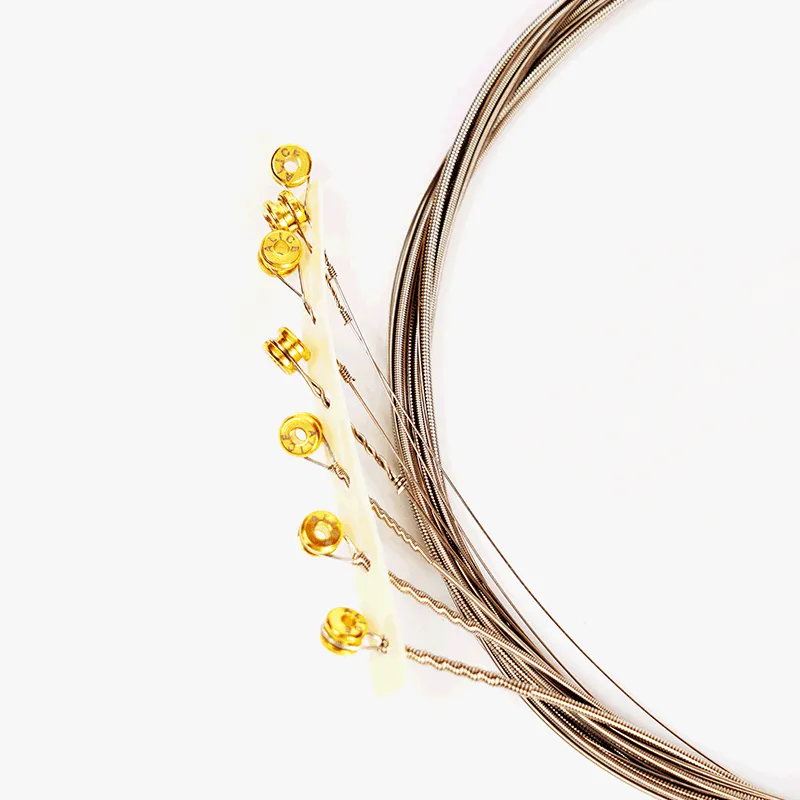
 

Electric guitar strings AE530

Electric guitar strings AE530

5. Choosing the Right Gauge for You

The “best” string gauge depends on several factors:

Playing Style: Soloists prefer lighter gauges; rhythm players often prefer heavier ones.

Guitar Setup: Shorter scale guitars (like Gibson) handle heavier strings better.

Tuning Preference: Lower tunings need thicker strings to maintain clarity.

Finger Strength & Comfort: Beginners should start light and gradually experiment.

Pro Tip: Try different gauges and note how your guitar’s tone and feel change. There’s no one-size-fits-all solution — it’s about finding your personal balance.


6. Maintaining Your Guitar Strings

No matter the gauge, proper care ensures longer lifespan and consistent tone:

Wipe strings after each session to remove sweat and dirt.

Store your guitar in a stable, dry environment.

Replace strings every 1–2 months (or more often for frequent players).


7. Alice Electric Guitar Strings – Precision, Tone, and Durability

When you’ve found your ideal string gauge, choosing a reliable string manufacturer is just as important — and that’s where Alice Electric Guitar Strings stand out.

With decades of experience and global recognition, Alice is a professional manufacturer known for high-quality materials, precision craftsmanship, and consistent tone.

Why Guitarists Choose Alice:

Wide range of gauges (.008–.052+) to suit every genre and playing style

Nickel-plated steel, pure nickel, and stainless steel options for tonal versatility

Advanced anti-rust coating extends string life while maintaining brightness

Perfect tension control for stable tuning and smooth playability

Global certifications and professional artist endorsements

Whether you’re chasing the warmth of vintage rock or the punch of modern metal, Alice Electric Guitar Strings provide the tone, feel, and reliability that every guitarist deserves.

Relate News

Guitar Picks manufacturers

How Guitar Picks Affect Tone – And Why Stocking the Right Types Matters

The guitar pick, or plectrum, is the very first point of contact between the player and the strings. Its material, thickness, shape, and texture each affect how energy is transferred to the strings, shaping the instrument’s tone. Even the slightest change in pick design can alter the warmth, brightness, volume, and articulation of the sound produced.
guitar accessories OEM

Electric Guitar Strings Gauge Chart: A Complete Guide for Guitarists

As a trusted manufacturer offering electric guitar strings for wholesalers and guitar accessories OEM/ODM solutions, Alice provides competitive pricing, bulk availability, and reliable global distribution—supporting music stores, wholesalers, and educational institutions worldwide.
Violin Strings

What Are Violin Strings Made Of?

The violin, one of the most expressive and emotionally captivating instruments, produces its voice through the subtle vibration of its strings. While the bow and the violin body contribute to tone and resonance, it is ultimately the strings that define the instrument’s timbre, playability, and response. A question often asked by both learners and professionals is: What are violin strings made of? The answer involves centuries of evolution, material innovation, and craftsmanship that reflect both tradition and modern technology.
Ukulele Strings

Folk Instrument Strings: Types, Materials & How to Choose the Right Set

Folk music is rich in cultural heritage, emotional storytelling, and sonic diversity. Whether it’s the bright ring of a mandolin, the deep warmth of a bouzouki, or the resonant twang of a banjo, each folk instrument tells its own story—not just through melodies and technique, but through the strings that bring it to life.
Phosphor bronze strings

Which Acoustic Guitar Strings Fit Different Music Styles Best?

When choosing a guitar, most players focus on the body type, wood, or brand—but one of the most underrated factors affecting tone and playability is the type of guitar strings you use. And if you're serious about shaping your sound, matching your string type to your musical style can make a huge difference.
Replace Guitar String

Common Guitar String Problems: How to Fix Tuning Issues, Rust, and String Breakage

Guitar strings are a crucial part of your instrument, directly affecting your tone, tuning stability, and playing experience. However, over time and with regular use, strings can develop various issues such as tuning instability, rust, or even sudden breakage. These problems can be frustrating, especially for beginners, but the good news is—they're often preventable and fixable.
Guitar String

Complete Guide to Guitar String Materials: Which One Is Right for You?

Choosing the right guitar strings is one of the most important decisions a guitarist can make—yet it's often overlooked. Beyond string gauge or brand, the material of the strings plays a crucial role in shaping the tone, feel, and even longevity of your instrument. Whether you play acoustic, electric, or classical guitar, understanding the different types of string materials can help you find the sound and feel that best matches your playing style.
Orchestral Strings

The Complete Guide to Orchestral Strings: Everything You Need to Know

Alice Strings is a trusted global brand offering high-quality orchestral strings for violins, violas, cellos, and double basses. With years of experience in string manufacturing and a dedication to innovation, Alice blends traditional craftsmanship with modern materials to meet the needs of musicians at every level.
classical guitar strings

Inside the Craftsmanship: The Manufacturing Process of Guitar Strings

From selecting the finest raw materials to precision winding and protective coatings, guitar string manufacturing is a sophisticated blend of science and art. Every step influences the final product’s sound, feel, and durability, ensuring musicians can express themselves freely and reliably through their instrument.
Guitar String

Guitar String Guide: Top Picks for Electric, Acoustic, and Classical Guitars

Alice Strings is a trusted name in the world of guitar accessories, offering a wide range of high-quality strings for electric, acoustic, classical guitars, and more. With a deep understanding of materials, manufacturing precision, and player needs, Alice Strings delivers consistent performance across all genres and playing levels.
classical guitar strings

How Alice Guitar Strings Compare to Leading Brands

When choosing guitar strings, musicians across the world are faced with a broad selection of materials, tones, brands, and features. While many international string manufacturers offer excellent products, it’s important to understand how different brands compare

The ABCs of Cello Strings: Materials, Tension, and Maintenance

Leave A Message