When it comes to shaping your guitar’s tone, nothing has a greater impact than the strings themselves. Whether you play rock, jazz, metal, or blues, your choice of electric guitar strings directly influences how your instrument feels, sounds, and responds.
1. Understanding String Gauge
The gauge refers to the thickness (diameter) of the guitar string, measured in thousandths of an inch. A typical set might be labeled as “.010–.046” — this means the thinnest (high E) string is 0.010" and the thickest (low E) is 0.046".
Different gauges affect playability, tone, and tension:
Gauge Type | Example Set | Tone & Feel | Ideal For |
Extra Light (.008–.038) | Easy to bend, less tension | Bright tone, ideal for beginners or fast soloing | Lead guitarists, shredders |
Light (.009–.042) | Balanced tone and feel | Easy bends, good sustain | Versatile styles |
Regular (.010–.046) | Classic standard set | Fuller tone, moderate tension | General purpose, rhythm & lead |
Heavy (.011–.050+) | Tight and thick tone | Strong mids and lows, more sustain | Metal, drop tuning, rhythm players |
Tip: Beginners may prefer light gauges for easier bending, while experienced players might opt for heavier strings for deeper tone and stability.
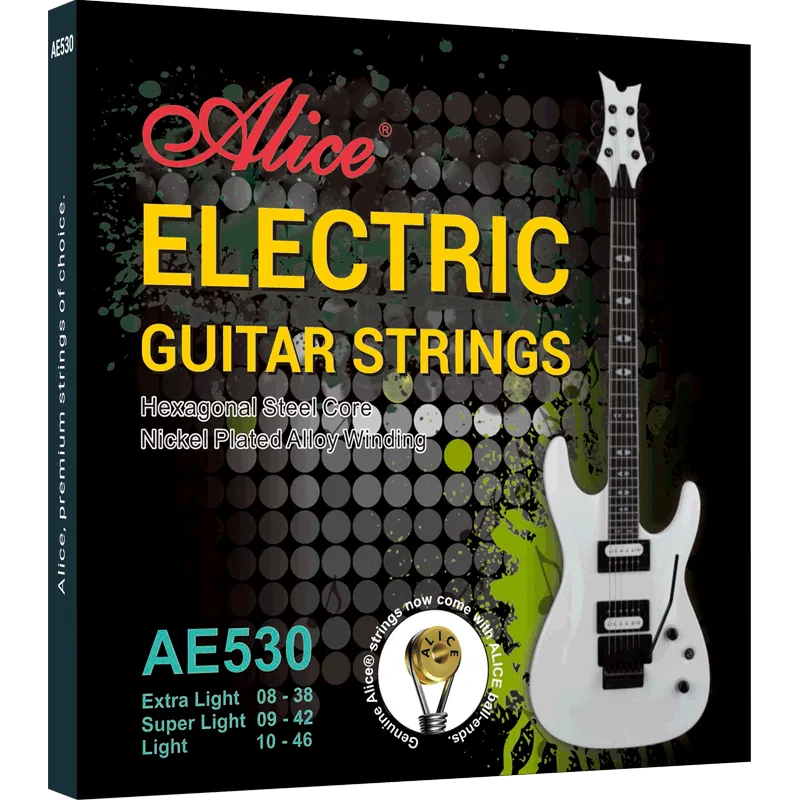
【Electric guitar strings AE530】
2. String Material and Its Effect on Tone
Electric guitar strings are made from different metal alloys, and each material has a distinct effect on tone and magnetic response.
Material | Description | Tone Characteristics |
Nickel-Plated Steel | The most common material. Combines steel’s brightness with nickel’s warmth. | Balanced tone, suitable for all styles |
Pure Nickel | Vintage-style tone, used in classic rock and blues. | Warm, smooth, less bright |
Stainless Steel | Highly resistant to corrosion, great for bright and cutting tones. | Bright, crisp, long-lasting |
Cobalt Alloy | Strong magnetic response and high output. | Powerful, dynamic, modern tone |
Coated Strings | Protective polymer layer to resist sweat and corrosion. | Longer lifespan, slightly smoother feel |
Pro Tip: For classic rock and blues, try pure nickel strings. For metal and modern tones, stainless steel or nickel-plated steel are choices.
3. How Gauge and Material Affect Tone
Both the gauge and material of your strings influence tone and performance:
Thicker strings = more sustain, stronger low end, and fuller tone.
Thinner strings = brighter sound, easier bends, and faster playability.
Nickel-plated = balanced warmth and clarity.
Stainless steel = cutting highs, perfect for aggressive tones.
Coated strings = consistent tone over time, great for long-term use.
Ultimately, the right combination depends on your guitar, genre, and playing style.
4. When to Replace Your Strings
Even the best strings lose their brilliance over time due to sweat, oil, and corrosion. Signs that it’s time to change your strings include:
Dull or muted sound
Difficulty staying in tune
Visible rust or discoloration
Sticky or rough texture
For frequent players, it’s recommended to change your strings every 1–2 months, or sooner if you play live often.
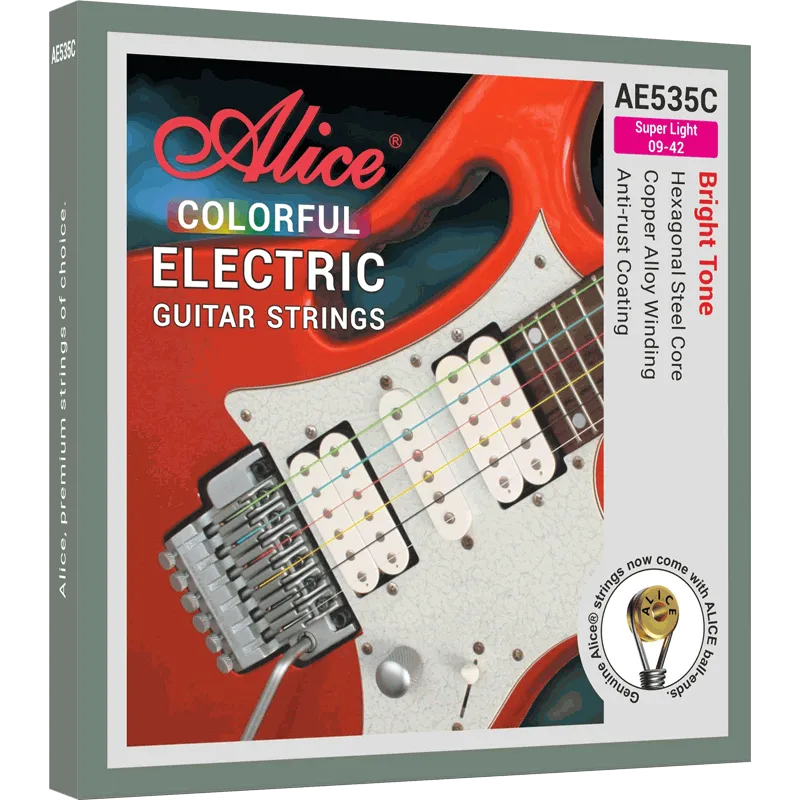
【Electric guitar strings AE535C】
5. Tips for Maintaining Electric Guitar Strings
To extend the life of your strings:
Always wash your hands before playing
Wipe the strings with a clean cloth after every session
Use a string cleaner or conditioner
Store your guitar in a dry, stable environment
These small steps can help preserve your tone and ensure a smoother playing experience.
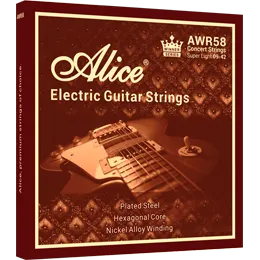
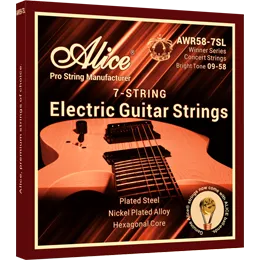
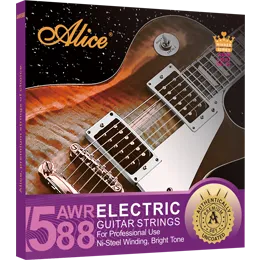
6. Alice Electric Guitar Strings
When you’re ready to take your sound to the next level, Alice Electric Guitar Strings deliver the perfect balance of tone, durability, and comfort.
With decades of experience in string manufacturing, Alice has become a global leader trusted by professionals and beginners alike.
Key Features of Alice Electric Guitar Strings
High-quality nickel-plated steel for bright and balanced tone
Precise winding technology ensuring consistent tension and tuning stability
Anti-rust coating for longer string life
Smooth feel for comfortable playability
Available in multiple gauges and materials to match every player’s needs
Whether you’re chasing the vintage warmth of pure nickel or the modern edge of stainless steel, Alice Electric Guitar Strings help you express your true sound.
Explore now: Alice Electric Guitar Strings
FAQ: Electric Guitar Strings
Q1: What gauge should beginners use?
A: Start with .009–.042 for an easy feel and smooth bends.
Q2: Are coated strings worth it?
A: Yes. They resist sweat and corrosion, keeping your tone fresh longer.
Q3: How often should I replace my strings?
A: Every 1–2 months, depending on how often you play.
Q4: Can I mix different gauges?
A: You can, but it’s better to stay within a balanced set to maintain neck tension and tone consistency.
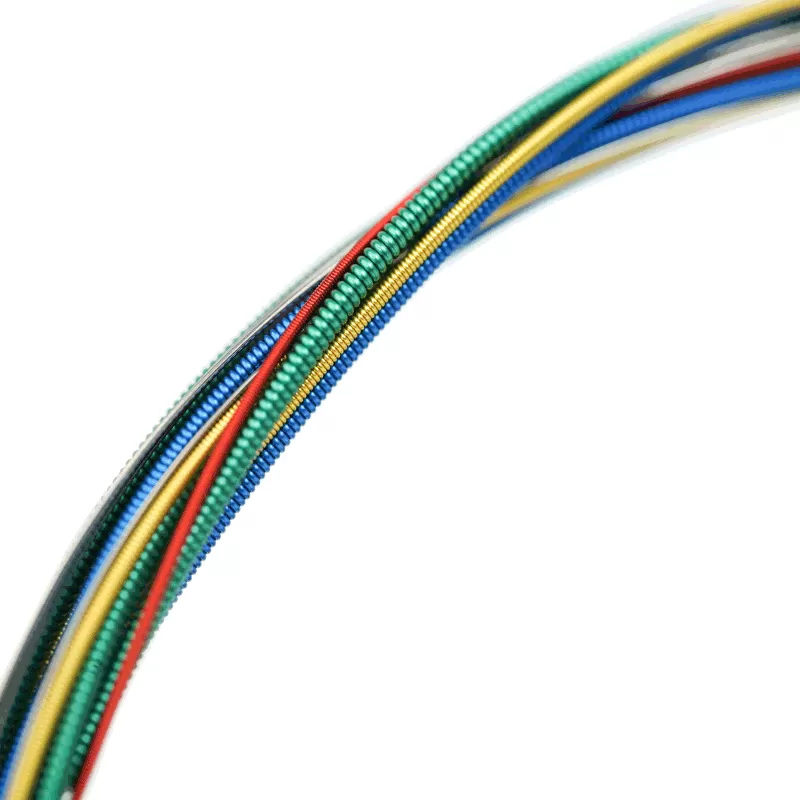
【AE535C Colorful Copper Plated Alloy Electric guitar strings】
Conclusion
Choosing the right electric guitar strings is a journey of tone, comfort, and style. By understanding gauge and material, you’ll unlock the sound that best fits your music.
And with Alice Electric Guitar Strings, you can count on precision craftsmanship, rich tone, and lasting durability — all at an exceptional value.
Find your perfect match today: Alice Electric Guitar Strings