

Bass Strings vs Guitar Strings: Key Differences Explained
Bass strings vs guitar strings: learn the key differences in thickness, scale length, tension, construction, tone, and compatibility, and find out if they can be used interchangeably.




By Alice String — Leading OEM Guitar String Manufacturer in China
When choosing acoustic guitar strings for OEM or private-label production, material choice directly affects tone, lifespan, and production complexity. Two of the most popular alloys are Phosphor Bronze and 80/20 Bronze. This article explores their differences in material science, tone, manufacturing challenges, cost, and ideal applications.
Composition: 80% copper, 20% zinc
Known as “brass bronze”
Bright, clear tone with high initial projection
Tends to oxidize faster, making protective coatings essential
Composition: Copper, 8–10% tin, ~0.01–0.35% phosphorus
More corrosion-resistant than 80/20 bronze
Provides warmer, more balanced tone
Maintains brightness longer over time
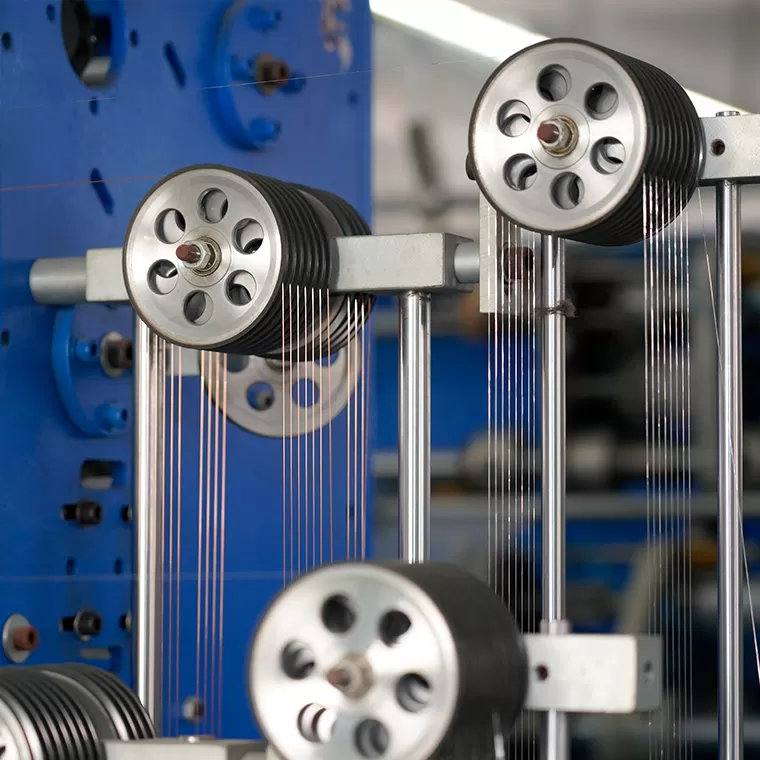
Phosphor bronze requires more precise melting and rolling during wire production
80/20 bronze is easier to draw and wind, but more prone to surface oxidation
Coating requirements differ: Phosphor bronze may need light coating; 80/20 often requires protective anti-rust or nano coating
Feature | 80/20 Bronze | Phosphor Bronze |
Initial Brightness | Very high | Moderate |
Long-term Tone | Fades faster | More stable |
Warmth | Less | More |
Sustain | Shorter | Longer |
Projection / Volume | Strong | Moderate |
Summary: 80/20 bronze is ideal for studio recordings or live settings requiring immediate brightness, while phosphor bronze suits fingerstyle players and long-term consistent tone.
For details on how different tonalities influence a player's specific choices, please refer to our [Phosphor Bronze vs. 80/20 Bronze Strings: Performance Application Guide].
Related Article: Do Coated Guitar Strings Really Last Longer? (Full Test Data)
Phosphor Bronze: Requires precision rolling and heat treatment
80/20 Bronze: Easier to draw, but surface oxidation control is critical
Phosphor bronze: minimal coating for preservation of warmth
80/20 bronze: heavier anti-rust or nano coating to maintain brightness
Both alloys require tensile strength and diameter tests, but 80/20 bronze requires more frequent surface corrosion inspections during batch production
Factor | 80/20 Bronze | Phosphor Bronze |
Raw Material Cost | Lower | Slightly Higher |
Production Complexity | Moderate | Higher |
Coating / Anti-Rust Expense | Higher | Moderate |
OEM Pricing Impact | Lower | Slightly Higher |
Summary: While phosphor bronze may cost slightly more, the longer-lasting tone and consistent quality can justify the investment, especially for premium brands.
Players seeking bright projection
Studio or live performance where initial sparkle is crucial
OEM brands targeting entry-to-mid-level markets
Fingerstyle players
Long-term tone stability required
Premium OEM brands targeting high-end acoustic guitar users
Consider coating and packaging to extend shelf-life
OEM brands often offer both alloys as part of product lines to meet diverse customer preferences
Related Article: How to Choose the Right Guitar String Manufacturer in China
For OEM manufacturers and private-label brands:
80/20 Bronze = bright, cost-effective, easy to produce, short-term projection
Phosphor Bronze = warm, long-lasting, premium feel, slightly higher cost
Alice String provides both alloys in OEM and ODM options, with customizable gauges, coatings, and packaging. Brands can offer diverse tone options to satisfy beginner, intermediate, and professional guitar players worldwide.
Request Free Samples — Compare 80/20 vs Phosphor Bronze strings
Get OEM Quote — Specify gauge, alloy, coating, and packaging
Download Catalog — Full range of acoustic, electric, and classical strings
Author
Written by Alice Strings Technical Team
Based on Alice’s guitar string manufacturing experience and long-term feedback from educators and beginner players.