The cello is a bowed stringed instrument that originated in the 16th century. The word cello is simplified from Italian Violoncello. Known for its warm and rich tone, the cello has become an indispensable tenor and bass instrument in the orchestra. Cello is suitable for playing lyrical melodies to express deep and complex feelings.
Among all the accessories of the cello, the strings are the most important ones that affect the sound of the instrument. Different cello strings produce different tones. For instance, the A-string of the cello is high-pitched and full of tension, the tone of the D-string is hazy and fuzzy, and the G-string and C-string are both low in tone. A good set of strings can make playing easier and improve the sound quality of the cello. This article will discuss three cello string types and introduce the gauge.

The basics of cello string type
Strings are the most frequently replaced parts of a cello. The quality of strings has an important impact on the sound quality of the cello. Cello strings can divide into three types: gut, synthetic, and steel cello strings.
1. Gut core strings
In the past, people used sheep gut to make strings for cellos. As the oldest type of string, gut strings provide players with a soft and rich sound. These strings are more suitable for classical and baroque music than jazz or alternative music. However, the gut core strings do not last as long as other strings. Also, small changes in temperature and humidity will affect the pitch of the gut core strings, and the pitch will not be maintained for a long time, so it needs to be adjusted in time.
2. Synthetic core strings
Synthetic core strings were invented in the 1970s using synthetic fibers (Kevlar) and nylon (Perlon). It is designed to replicate the tone of gut core strings. Synthetic core strings retain pitch more effectively and are less sensitive to temperature and humidity fluctuations than gut core strings. But the biggest disadvantage of synthetic core strings is that it has a short lifespan and are easily broken.
3. Steel core strings
Steel core strings are also known as metal strings. It is made of straight or stranded wire. Steel core strings are the most stable and durable of all cello strings, so they are the preferred strings for most players. This type of string provides the player with a stable pitch and is not affected by air humidity. Steel core string is inexpensive, so it has become the first choice for many beginners.
Cello string gauge
Gauge refers to the thickness of the string. Cello strings come in three gauges: light, medium, and heavy. Typically, light strings produce lower volume and quicker response, while heavier strings produce louder and fuller sounds but are slower in response. Medium strings are the most popular strings for players because this type of string produces an even, balanced tone for most instruments.
Recommendation of cello strings
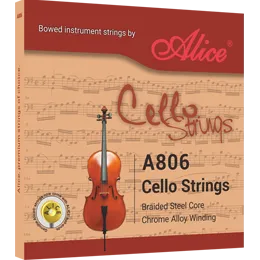
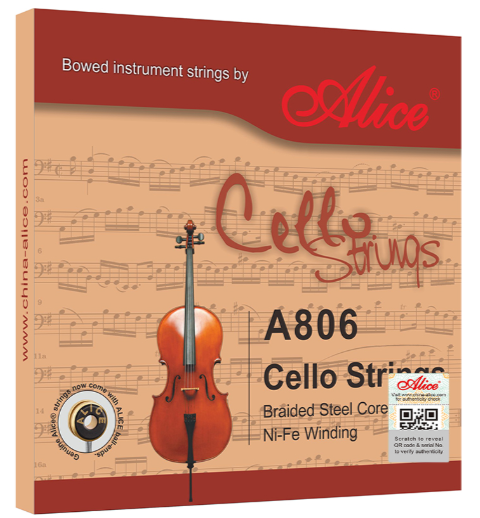
In conclusion, the important factor of strings is that it determines the tone, volume, and sound quality of a cello. Alicestrings offers premium cello strings products for both beginner and advanced cello players. Alicestrings’ A806 Cello String Set uses steel as the core and nickel-iron winding for the string. This product has a bright and warm tone, suitable for performance and practice.
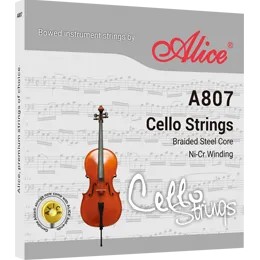
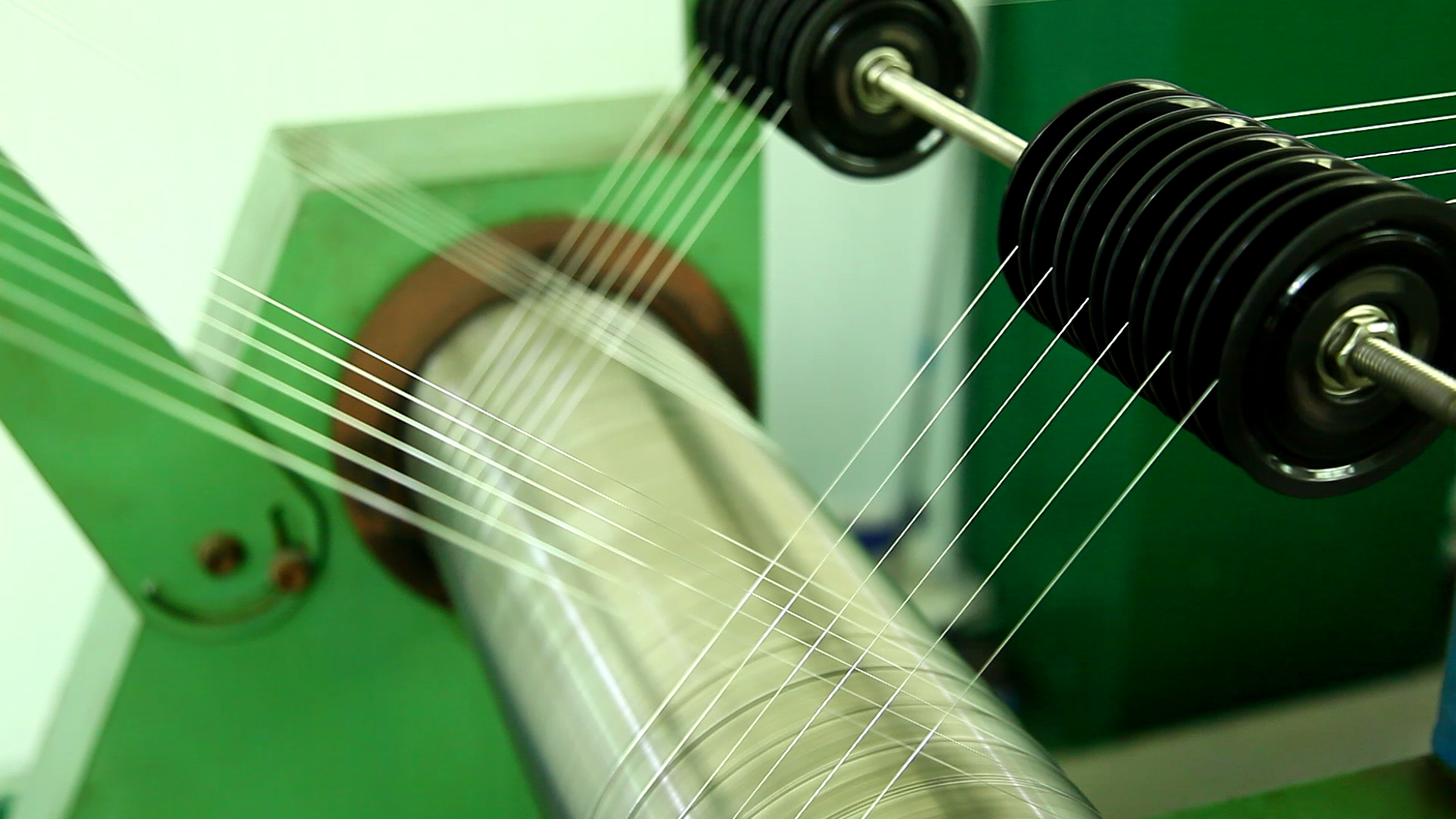
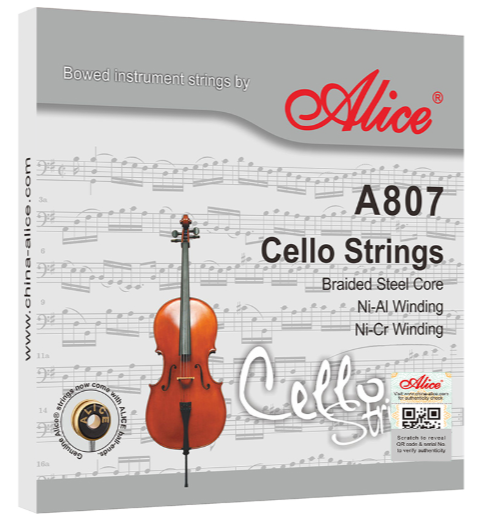
Besides, Alicestrings’ A807 Cello String Set is also a good choice for players. The A807 strings in this set have a round tone and rich resonance, especially suitable for performance, recording, and concerts. The material of the string core is steel, wrapped with Ni-Al and Ni-Cr. Both products are suitable for cellos of size 4/4. Alicestrings use automatic winding machines to produce the strings, which can guarantee the quality and performance of the products to maintain a high level.
Contact us if you are interested in Alicestrings’ cello strings product!