



Bass Strings vs Guitar Strings: Key Differences Explained
Bass strings vs guitar strings: learn the key differences in thickness, scale length, tension, construction, tone, and compatibility, and find out if they can be used interchangeably.








Introduction
Choosing the right bass string gauge is one of the most important decisions for achieving your ideal tone, playing comfort, and overall performance.
Many bass players focus mainly on string material, such as nickel or stainless steel, but string gauge—the thickness of the strings—has an equally significant impact on how a bass feels and sounds.
A lighter gauge can make playing easier and provide a faster response, while a heavier gauge can deliver stronger tension, deeper low-end, and improved stability for aggressive playing styles.
However, there is no single "best" bass string gauge for every player. The ideal choice depends on factors including:
· Playing style
· Musical genre
· Bass scale length
· Number of strings
· Tuning method
· Tone preference
· Playing technique
This guide explains bass string gauges in detail, including common sizes, tone differences, recommended applications, and how to choose the right thickness for your instrument.
For most bass players, medium gauge bass strings (.045–.105) are the best starting point because they provide a balanced combination of tone, tension, comfort, and versatility.
· Light gauge (.040–.095): Easier to play, faster response, ideal for beginners, slap, and players who prefer lower tension.
· Medium gauge (.045–.105): The industry standard, suitable for most playing styles including rock, pop, blues, and general performance.
· Heavy gauge (.050–.110 or heavier): Higher tension, stronger low-end, ideal for metal, drop tuning, and powerful playing techniques.
The right gauge depends on your playing style, bass setup, and personal preference.
· What Does Bass String Gauge Mean?
· Bass String Gauge Chart
· How String Gauge Affects Tone and Feel
· Light Gauge Bass Strings
· Medium Gauge Bass Strings
· Heavy Gauge Bass Strings
· Choosing Bass String Gauge by Playing Style
· Bass String Gauge for 4-String vs 5-String Bass
· How Scale Length Affects String Gauge Choice
· Common Mistakes When Choosing Bass String Gauge
· Custom Bass String Gauge Solutions
· Frequently Asked Questions
· About Alice Bass Strings
Bass string gauge refers to the diameter or thickness of each string, usually measured in inches.
For example:
A common 4-string bass set:
.045 / .065 / .085 / .105
means:
· G string: .045 inch
· D string: .065 inch
· A string: .085 inch
· E string: .105 inch
The thicker the string, the higher the tension and the stronger the physical resistance under your fingers.
Gauge affects:
· String tension
· Playing comfort
· Tone brightness
· Low-end response
· Sustain
· Attack
· Tuning stability
AWR698(45-105) MEDIUM 4-STRING POLISHED NICKEL STEEL ELECTRIC BASS STRINGS
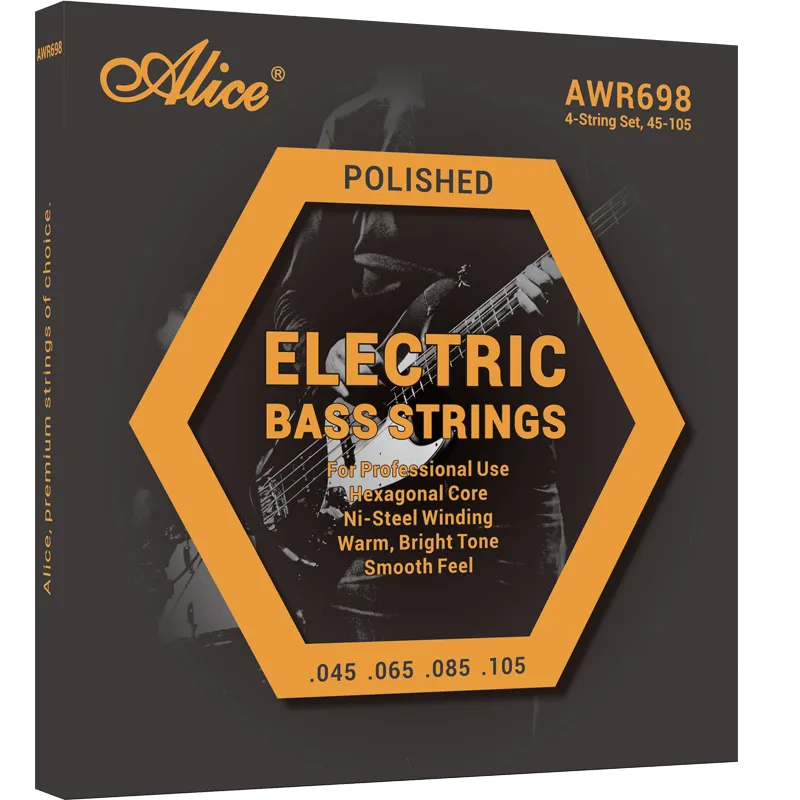
The following chart shows the most common bass string gauges and their typical applications.
Gauge Type | Common Sizes | Feel | Tone Characteristics | Best For |
Extra Light | .035–.090 | Very soft | Bright, fast response | Beginners, special techniques |
Light | .040–.095 | Easy playing | Clear highs, moderate lows | Slap, fast playing |
Medium | .045–.105 | Balanced | Full tone, versatile | Most players |
Heavy | .050–.110 | High tension | Powerful lows, strong attack | Rock, metal |
Extra Heavy | .055–.120+ | Very high tension | Maximum low-end | Extreme tuning |
String gauge changes much more than just playing difficulty.
Thicker strings create higher tension.
Higher tension provides:
· More resistance
· Stronger note stability
· More powerful attack
Lower tension provides:
· Easier fretting
· Faster movement
· More flexibility
Generally:
Produces:
· Brighter tone
· Faster response
· More treble presence
· Less low-end weight
Produces:
· Fuller low frequencies
· Stronger fundamental tone
· More sustain
· Greater punch
Heavy gauge strings often provide longer sustain because they contain more mass and maintain stronger vibration.
However, sustain is also affected by:
· String material
· Bass construction
· Bridge design
· Playing technique
Light gauge strings are thinner and easier to play.
They provide:
· Lower finger pressure
· Faster playing response
· Easier bending
· Reduced hand fatigue
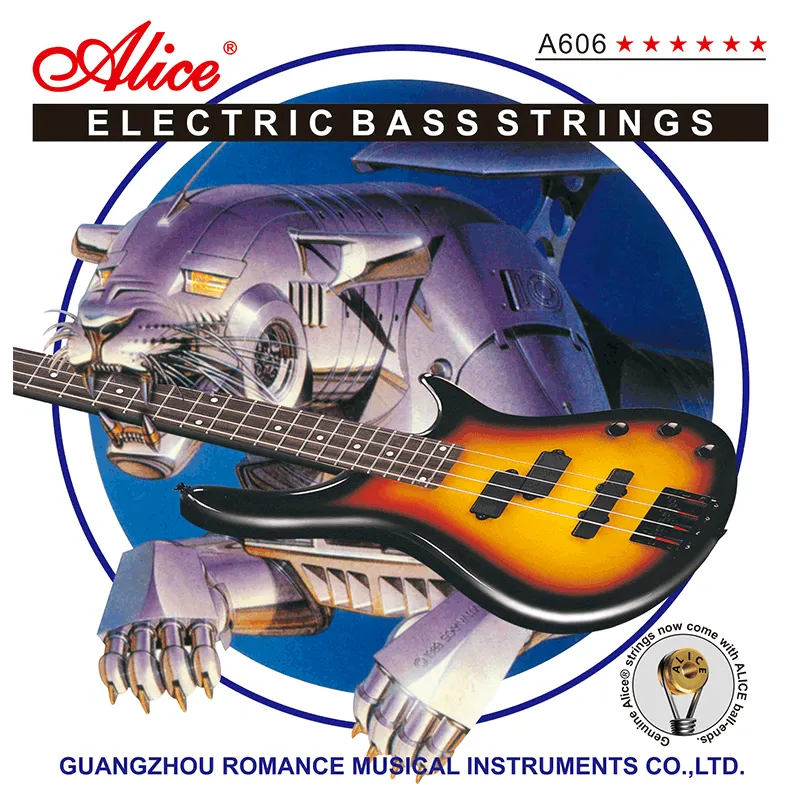
A606(4)-L 40-95 LIGHT 4-STRING NICKEL PLATED ALLOY ELECTRIC BASS STRINGS
Light gauge strings are popular among:
· Beginners
· Slap bass players
· Fast technical players
· Players who prefer a softer feel
They are especially useful for musicians who prioritize comfort and speed.
Because they have lower tension, they may produce:
· Less powerful low-end
· More string movement
· Reduced stability in very low tunings
For aggressive playing or drop tuning, heavier gauges are usually preferred.
Medium gauge strings are considered the standard choice for most bass players.
They offer the best balance between:
· Comfort
· Tone
· Tension
· Sustain
· Versatility
AWR688(45-105) MEDIUM 4-STRING NICKEL STEEL ELECTRIC BASS STRINGS
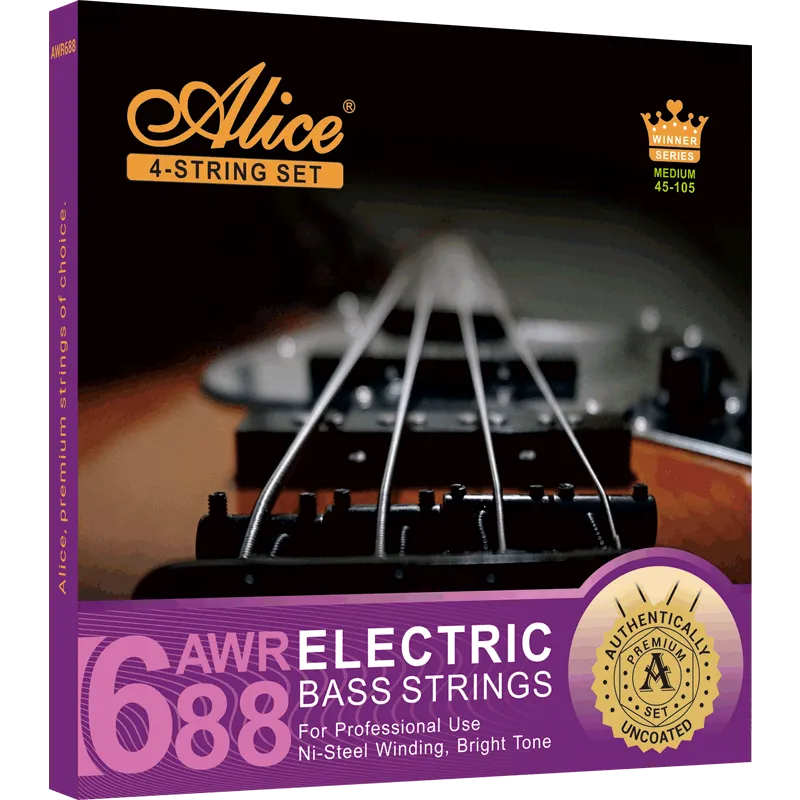
A typical .045–.105 set provides:
· Full low frequencies
· Balanced mids
· Clear articulation
· Comfortable resistance
This makes it suitable for:
· Rock
· Pop
· Blues
· Country
· Worship
· Studio recording
· Live performance
For players who are unsure where to start, medium gauge is usually the safest choice.
Heavy gauge strings provide increased tension and stronger tonal output.
They offer:
· Powerful low-end
· Strong attack
· Improved tuning stability
· Excellent sustain
Heavy gauge strings are commonly used for:
· Metal
· Hard rock
· Drop tuning
· Aggressive picking
· High-volume performance
They are especially effective when players need a tight and controlled low-frequency response.
Heavy strings may feel more demanding because they require:
· More finger strength
· Higher playing pressure
· Proper bass setup
The best bass string gauge depends heavily on how you play. A bassist who performs smooth fingerstyle jazz will usually have different requirements from a player performing aggressive metal or modern slap techniques.
The following recommendations provide a practical starting point.
Fingerstyle is one of the most common bass techniques, used across rock, pop, blues, jazz, and many other genres.
Medium Gauge (.045–.105)
or
Light-Medium Gauge (.040–.100)
Fingerstyle players usually need a balance between:
· Warm tone
· Comfortable feel
· Dynamic response
· Controlled sustain
Medium gauge strings provide enough tension for a full bass tone while remaining comfortable for long playing sessions.
Nickel-plated strings combined with medium gauge are especially popular because they provide:
· Smooth playing feel
· Balanced frequency response
· Natural low-end
Slap bass requires fast response, strong attack, and clear harmonics.
Light Gauge (.040–.095)
or
Medium-Light Gauge (.045–.100)
Lighter strings allow:
· Faster thumb movement
· Easier popping
· More immediate response
· Reduced hand fatigue
Many slap players prefer lighter gauges because they provide a lively, responsive feel.
Stainless steel strings are also commonly paired with lighter gauges because their bright tone enhances:
· Pop sounds
· Harmonic clarity
· Percussive attack
Bassists who use picks often prefer strings with strong articulation and consistent attack.
Medium Gauge (.045–.105)
or
Heavy Gauge (.050–.110)
Pick playing benefits from:
· Stable tension
· Strong attack
· Clear note separation
Medium gauge provides versatility, while heavier gauges create a more aggressive rock tone.
Jazz and vintage styles often prioritize warmth, smoothness, and controlled dynamics.
Medium Gauge (.045–.105)
or
Flatwound Medium Gauge
These styles usually benefit from:
· Rounded low-end
· Smooth mids
· Reduced brightness
Many jazz players prefer nickel or flatwound strings because they produce a warmer, more traditional bass character.
Heavy music requires strong low-end definition and excellent tuning stability.
Heavy Gauge (.050–.110)
or
Extra Heavy Gauge (.055–.120)
Heavier gauges help maintain:
· Tight low frequencies
· Stable tuning
· Powerful attack
· Strong sustain
For distorted bass tones, heavier gauges combined with stainless steel strings can help the bass remain clear in dense mixes.
Playing Style | Recommended Gauge | Recommended Characteristics |
Beginner | .045–.105 | Balanced and easy to control |
Fingerstyle | .045–.105 | Full tone and comfortable tension |
Slap Bass | .040–.095 | Fast response and bright attack |
Rock | .045–.105 | Versatile and powerful |
Metal | .050–.110+ | Tight low-end and stability |
Jazz | .045–.105 | Warm and smooth |
Recording | .045–.105 | Balanced frequency response |
Drop Tuning | .050–.120 | Strong tension and tuning stability |
The number of strings on your bass also affects gauge selection.
A 4-string bass typically uses:
· E
· A
· D
· G
A 5-string bass adds:
· Low B
The additional low string creates different tension and tonal requirements.
The most common 4-string bass gauges are:
Example:
.040 / .060 / .080 / .095
Advantages:
· Easy playing
· Fast response
· Comfortable feel
Best for:
· Beginners
· Slap
· Pop
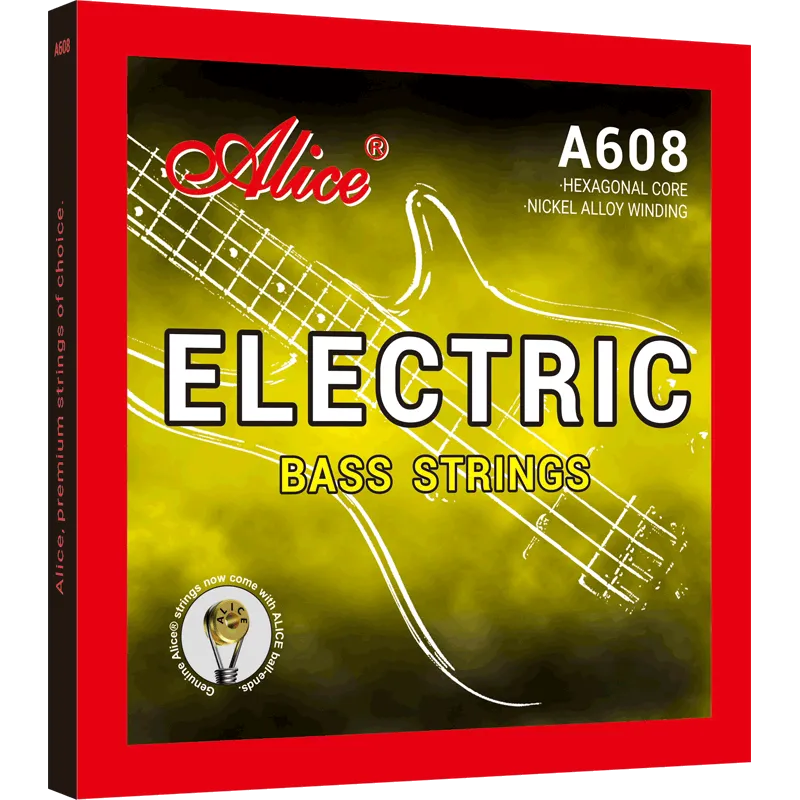
Alice A608(4)-L 40-95 LIGHT 4-STRING NICKEL PLATED ALLOY ELECTRIC BASS STRINGS
Example:
.045 / .065 / .085 / .105
This is the most popular bass string configuration.
Advantages:
· Balanced tension
· Strong tone
· Wide genre compatibility
Best for:
· Rock
· Blues
· Pop
· General playing
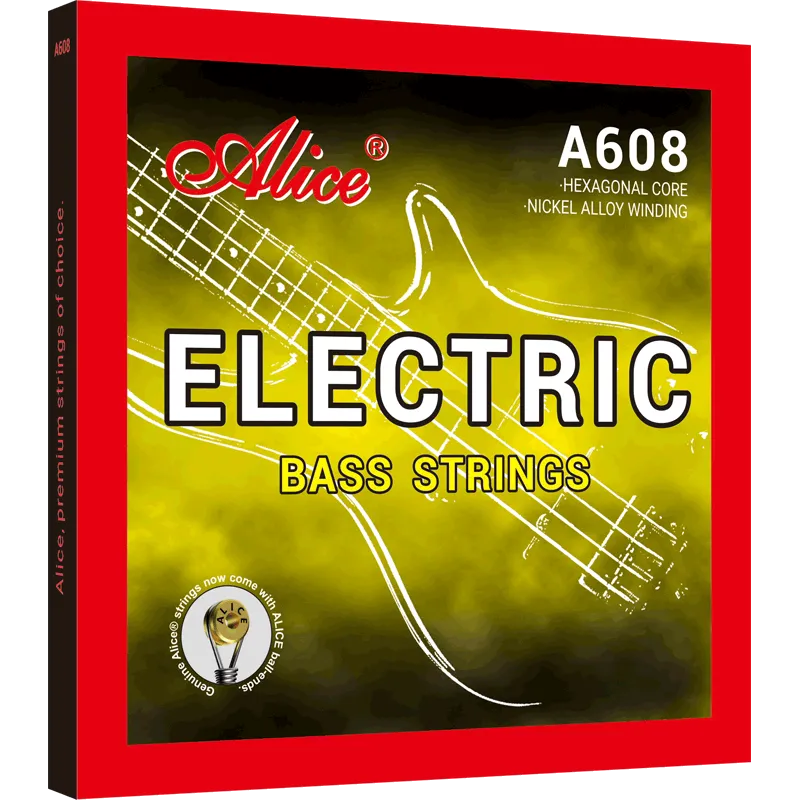
Alice A608(4)-M 45-105 MEDIUM 4-STRING NICKEL PLATED ALLOY ELECTRIC BASS STRINGS
Example:
.050 / .070 / .090 / .110
Advantages:
· Strong low-end
· Powerful attack
· Improved tuning stability
Best for:
· Metal
· Drop tuning
· Aggressive playing
Five-string basses require special attention because the low B string needs enough tension to avoid sounding loose or unclear.
Common 5-string sets:
Example:
.045 / .065 / .085 / .105 / .130
Suitable for:
· General playing
· Rock
· Pop
· Worship
Example:
.050 / .070 / .090 / .110 / .135
Suitable for:
· Metal
· Low tunings
· Extended-range playing
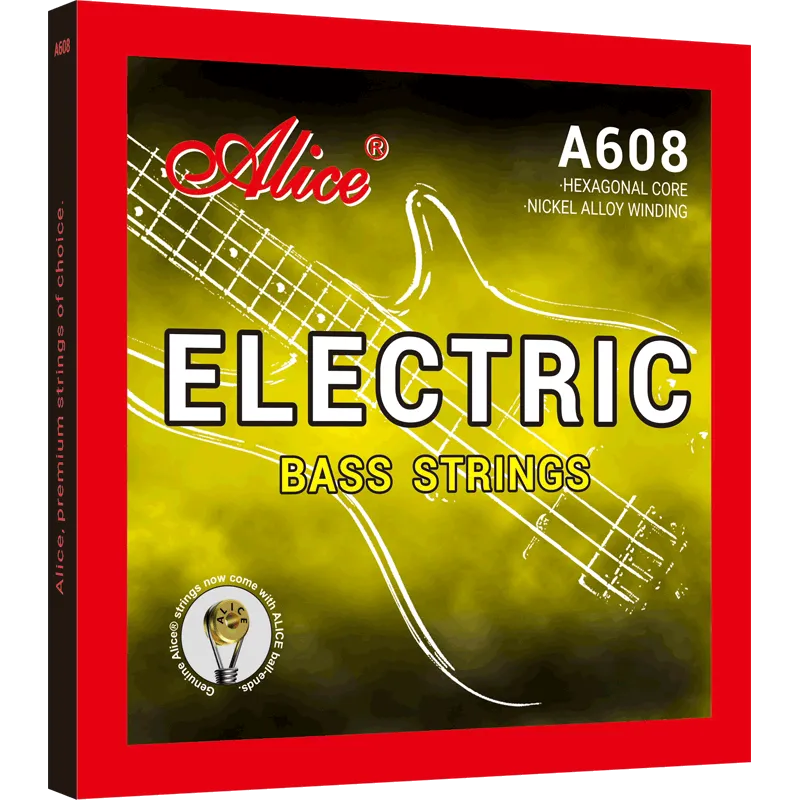
Alice A608(5)-M 45-130 MEDIUM 5-STRING NICKEL PLATED ALLOY ELECTRIC BASS STRINGS
The Low B string is often the most difficult string to balance.
If it is too light:
· It may feel loose
· Notes may sound unclear
· Intonation can become unstable
If it is too heavy:
· It may feel stiff
· The response may become slower
Common choices:
Low B Gauge | Application |
.125 | Standard 5-string playing |
.130 | Balanced low B performance |
.135+ | Drop tuning and heavy styles |
For most players, a .130 Low B string provides a good balance between tension and flexibility.
String gauge cannot be considered separately from bass scale length.
Common bass scale lengths include:
Scale Type | Length |
Short Scale | 30 inches |
Medium Scale | 32 inches |
Long Scale | 34 inches |
Extra Long Scale | 35 inches+ |
Short-scale basses naturally have lower string tension.
Many players choose:
· Medium gauge strings
· Slightly heavier gauges
to achieve a fuller tone and better stability.
Long-scale basses already provide higher tension.
Players can often use:
· Light gauge strings for easier playing
· Medium gauge for balanced performance
Extended-scale instruments often require specially designed strings to ensure:
· Correct tension
· Proper winding length
· Stable tuning
Always check the manufacturer's recommended string length before purchasing.
Choosing the right bass string gauge does not need to be complicated. By considering your playing style, instrument specifications, and tonal goals, you can quickly narrow down the best option.
Follow these steps before purchasing your next set of bass strings.
Your technique is one of the most important factors when selecting string gauge.
Ask yourself:
· Do I mainly play fingerstyle or slap?
· Do I use a pick?
· Do I play aggressive styles like metal?
· Do I need fast response or stronger tension?
General recommendations:
· Beginners → Medium gauge (.045–.105)
· Slap players → Light gauge (.040–.095)
· Rock players → Medium gauge (.045–.105)
· Metal players → Heavy gauge (.050–.110+)
String gauge has a direct effect on your bass tone.
Choose lighter gauges if you prefer:
· Brighter sound
· Faster response
· More flexibility
· Easier playing
Choose heavier gauges if you prefer:
· Stronger low-end
· More sustain
· Powerful attack
· Tighter response
Remember that gauge works together with string material.
For example:
· Light stainless steel strings → bright and very responsive
· Heavy nickel strings → warm with strong low-end
Before changing string gauge, consider your current instrument setup.
Changing from a light gauge to a heavy gauge may affect:
· Neck relief
· String action
· Intonation
· Pickup height
A significant gauge change may require a professional setup adjustment to maintain optimal playability.
Standard tuning and alternative tunings require different levels of string tension.
Common choice:
.045–.105
Suitable for most bass players.
Recommended:
.045–.105
or
.050–.110
A slightly heavier gauge can improve low-note stability.
For:
· Drop C
· Drop B
· Extended-range bass
consider:
.050–.120+
Heavier gauges help maintain tension and clarity.
Both string gauge and material influence bass tone, but they affect different aspects of performance.
· Tension
· Playing resistance
· Low-end response
· Sustain
· Note stability
· Tonal character
· Brightness
· Warmth
· Attack
· Feel
For example:
A medium gauge nickel string:
· Warm
· Balanced
· Comfortable
A medium gauge stainless steel string:
· Bright
· Aggressive
· Highly articulate
The best results often come from combining the right gauge with the right material.
Many players choose strings based only on recommendations from other musicians. However, the "best" gauge depends heavily on personal playing style and equipment.
Avoid these common mistakes.
A thicker string is not always better.
Heavy gauges provide more tension and low-end, but they may feel uncomfortable for players who prefer fast movement or lighter touch.
A slap bassist and a metal bassist usually have very different requirements.
For example:
· Light gauge may feel too loose for aggressive drop tuning.
· Heavy gauge may slow down fast slap techniques.
Always match the gauge to your playing approach.
A .045 string on a short-scale bass does not feel the same as a .045 string on a 35-inch bass.
Scale length changes:
· Tension
· Feel
· Response
Always confirm whether strings are designed for:
· Short scale
· Medium scale
· Long scale
· Extra-long scale
Large gauge changes may require adjustments.
When moving to significantly heavier or lighter strings, check:
· Neck adjustment
· Action height
· Intonation
Proper setup ensures the best tone and playing experience.
For musicians, retailers, and distributors, standard string gauges may not always meet specific market requirements.
Many brands choose customized bass strings to create products with unique playing characteristics and market positioning.
Different markets often require different specifications.
For example:
Beginner-focused products may prioritize:
· Comfortable tension
· Easy playability
· Affordable pricing
Professional products may require:
· Specific tension balance
· Extended range options
· Special tonal characteristics
Alice Strings provides OEM and ODM bass string solutions for international brands, distributors, and retailers.
Customization options include:
Including:
· Light gauge bass strings
· Medium gauge bass strings
· Heavy gauge bass strings
· Custom gauge combinations
Available options include:
· Nickel-plated steel
· Stainless steel
· Coated strings
· Other customized solutions
Support for:
· 4-string bass
· 5-string bass
· 6-string bass
· Long-scale bass
· Extra-long-scale bass
OEM services include:
· Custom packaging
· Private label production
· Brand logo printing
· Retail-ready solutions
With more than 20 years of experience in musical instrument string manufacturing, Alice Strings provides reliable bass string solutions for musicians, distributors, wholesalers, and global music brands.
Alice bass strings are produced with:
· Professional winding technology
· Strict quality control
· Consistent manufacturing processes
· Reliable material selection
· Flexible OEM/ODM capabilities
The product range includes:
· Electric bass strings
· Acoustic bass strings
· Nickel bass strings
· Stainless steel bass strings
· Custom bass string solutions
Whether you are a musician looking for reliable performance or a brand developing your own product line, Alice Strings provides professional solutions designed for consistent quality and market needs.
Choosing the right bass string gauge is about finding the balance between tone, comfort, tension, and playing style.
For most players:
· Light gauge (.040–.095) offers easier playing and faster response.
· Medium gauge (.045–.105) provides the most versatile all-around performance.
· Heavy gauge (.050–.110+) delivers powerful low-end and stability for demanding styles.
The ideal bass string gauge depends on your instrument, tuning, technique, and personal preferences.
For brands and distributors, customized bass string gauges provide opportunities to create products tailored to different player groups and market demands.
With extensive manufacturing experience and OEM/ODM capabilities, Alice Strings helps customers develop reliable bass strings with customized specifications, consistent quality, and professional support.
The most common bass string gauge is .045–.105 medium gauge. It provides a balanced combination of tone, comfort, tension, and versatility, making it suitable for most playing styles.
Most beginners should start with medium gauge strings (.045–.105). They provide enough tension for a full tone while remaining comfortable and easy to control.
Yes. Light gauge bass strings require less finger pressure and provide a faster response. They are often preferred by beginners, slap players, and musicians who prioritize comfort.
Generally, yes. Heavy gauge bass strings provide stronger tension, tighter low frequencies, and improved tuning stability, making them popular for metal and low tunings.
For drop tuning, heavier gauges are usually recommended.
Common choices:
· Drop D: .045–.105
· Drop C: .050–.110
· Lower tunings: .050–.120+
The ideal choice depends on tuning depth and playing style.
Light to medium-light gauges, such as .040–.095, are commonly used for slap bass because they provide fast response and easier popping techniques.
Yes. Thicker strings generally produce stronger low-end, more tension, and greater sustain, while thinner strings often produce brighter response and easier playability.
Yes, but significant gauge changes may require setup adjustments, including neck relief, action, and intonation.
· Bass Strings vs Guitar Strings
· Roundwound vs Flatwound Bass Strings
· How to Choose Bass String Gauge
· Nickel-Plated vs Stainless Steel Bass Strings
· How Long Do Bass Strings Last?
· Custom Bass Strings Manufacturer: OEM & Private Label Bass String Solutions
· How Bass Strings Are Made: Inside the Manufacturing Process