
How Long Do Acoustic Bass Strings Last? It's About Tone, Not Just Time
Learn how long acoustic bass strings last, what affects their lifespan, how to recognize signs of wear, and when to replace them.






Choosing the right acoustic bass strings involves more than matching a string set to a particular music style. String construction, winding materials, gauge, instrument characteristics, and playing technique can all influence the playing experience and sound.
Jazz, folk, pop, and live performance may involve different requirements for tonal balance, response, and projection. However, no single string type is ideal for every genre, and the same set of acoustic bass strings may work well across several musical applications.
Understanding these factors can help players choose strings more effectively. For brands, distributors, and wholesale buyers, it also provides a practical framework for comparing products and building an acoustic bass string range.
Music style provides a useful starting point when choosing acoustic bass strings, but it should not be the only consideration.
Before comparing individual products, consider four factors:
Tonal character: Whether the player prefers a warmer, brighter, or more balanced sound.
Playing response: How the strings feel and respond to different playing techniques and dynamics.
Instrument compatibility: Whether the string specifications are suitable for the intended acoustic bass.
Playing environment: Whether the strings will primarily be used for practice, recording, rehearsal, or live performance.
These factors are related. For example, a string set that sounds suitable during solo practice may behave differently when used with amplification or in a full band arrangement.
The most reliable approach is to identify the desired playing characteristics first, then compare string specifications and evaluate suitable products under realistic playing conditions.
Jazz bass playing often involves dynamic variation, articulation, and interaction with other instruments. Players may therefore look for strings that support a clear, responsive playing experience and a tonal character that fits their preferred style.
When selecting acoustic bass strings for jazz, consider:
The balance between low-frequency fullness and note definition
Response to changes in playing intensity
The desired tonal character in solo and ensemble settings
How the strings sound through the intended amplification or recording setup
Winding materials are one factor to consider when comparing products. Phosphor Bronze, for example, is used in string designs intended for a range of acoustic applications. However, its actual tonal result depends on the complete string construction, including the core, gauge, winding design, and the instrument itself.
Players seeking a particular jazz sound should test the complete string set rather than assume that a material name guarantees a specific tonal result.
Folk and acoustic arrangements often emphasize the natural character of the instruments and how they blend together.
In these settings, acoustic bass players may prioritize:
A balanced sound that supports other acoustic instruments
Clear note definition within the arrangement
A comfortable playing feel
Consistent performance during practice and regular use
Rather than selecting strings solely for brightness or warmth, consider how the bass fits into the overall arrangement. The desired result may be different for solo acoustic playing, a small ensemble, and a larger group with percussion and amplified instruments.
Core construction and winding materials can help distinguish products, but neither should be treated as a complete predictor of the finished sound. Comparing specifications and testing strings on the intended instrument provides a more useful basis for selection.
Pop music covers a wide range of arrangements, from acoustic-led songs to full-band productions. Acoustic bass strings may need to work across rehearsal, recording, and live performance environments.
When choosing strings for these applications, consider:
Clear note definition within the arrangement
A tonal balance that works with other instruments
Playing response at different dynamic levels
Compatibility with the instrument and amplification setup
A versatile string set can be useful for players who move between different musical settings. However, versatility should be evaluated through actual playing rather than inferred from a material or product description alone.
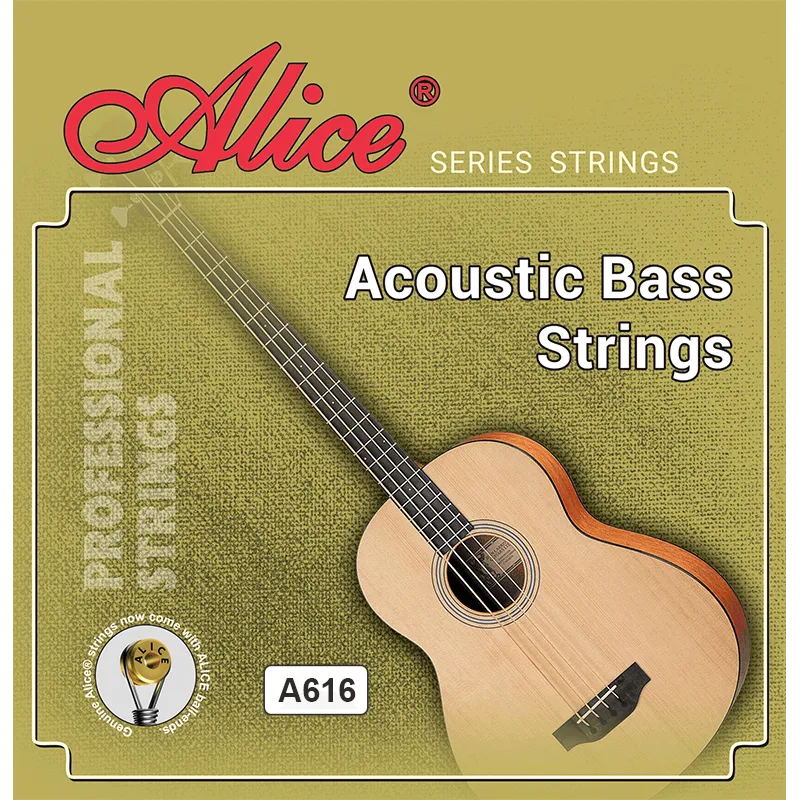
For example, the Alice A616 Acoustic Bass Strings feature a High-Carbon Steel Core with Copper Plated Alloy winding. This construction provides a concrete starting point for buyers comparing material combinations for practice and general playing applications.
Players and buyers should consult the current product specifications and test the strings to determine whether their response and sound suit the intended use.

In rock and other live performance settings, the acoustic bass may need to remain clear within a dense mix. The result depends on more than the strings alone.
Important considerations include:
Low-frequency definition within the full arrangement
The ability to maintain a clear bass part at different playing intensities
String response and playing feel
Instrument setup, amplification, and performance environment
String gauge and tension are relevant when comparing products, but higher tension does not automatically mean stronger projection or a better sound. Core construction, winding materials, instrument design, setup, and playing technique all contribute to the result.
For amplified performances, players should evaluate strings using the instrument and equipment they expect to use on stage. This is more reliable than selecting a string set based only on a general description such as “powerful tone” or “strong projection.”
Acoustic basses can also be used in solo arrangements, chamber settings, and other situations where individual notes need to remain clear.
In these applications, players may pay particular attention to:
Note definition across the instrument's range
Response to changes in articulation and dynamics
Playing comfort during extended sessions
How the strings complement the instrument's natural characteristics
These requirements are not exclusive to classical or solo music. They may also matter in jazz recordings, acoustic performances, and other settings where the bass has a more exposed role.
Instead of choosing strings based on a genre label, identify the playing characteristics that matter most and compare products against those requirements.
Acoustic bass strings can differ in core construction, winding materials, gauge, and other design details. These specifications help buyers compare products, but no single feature determines every aspect of sound or playing performance.
Core construction
The core is a fundamental part of string design. Different core constructions can affect the overall design and playing characteristics of a string, but the result depends on the complete construction and specifications.
Winding material
Winding materials are useful for distinguishing product designs. However, material names alone do not establish the exact sound, durability, or performance of a finished string.
Gauge and tension
Gauge and tension are important when considering playing feel, instrument compatibility, and the player's preferences. Buyers should confirm the manufacturer's specifications rather than assume that a particular gauge or tension is suitable for every acoustic bass.
Surface treatment
Some products include a specified surface treatment or coating. Buyers should confirm what the treatment is and what performance claims, if any, are supported by product documentation or testing.
The following Alice models illustrate different construction and material combinations. Use their specifications as a starting point for comparison rather than assuming that one model is universally better for a particular genre.
Model | Core construction | Winding or surface details | What to evaluate |
High-Carbon Steel Core | Copper Plated Alloy winding | Playing feel, sound, and suitability for the intended application | |
Hexagonal High-Carbon Steel Core | Confirm winding details in the official specification | Core construction, complete string design, and playing response | |
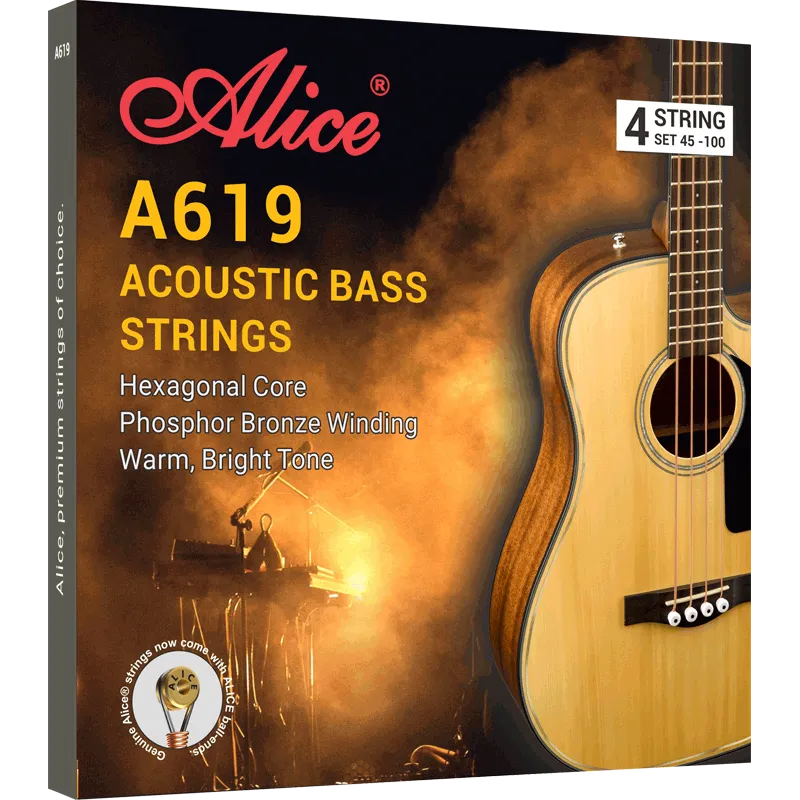
Refer to the official product specification | Phosphor Bronze winding with Nano Polished Coating | Material combination, coating details, sound, and playing characteristics |
The models should be compared using the full product specifications, including any available gauge, set configuration, and other relevant details. Where a performance difference is important to the buyer, sample testing is preferable to relying on assumptions based on material names.
To explore more options, visit the Alice Acoustic Bass Strings collection.

Once you have identified the desired sound and playing requirements, use the following checklist to narrow your options.
Check that the string set is intended for the type of acoustic bass you use. Confirm the required scale length, string configuration, installation requirements, and any model-specific limitations with the manufacturer or product documentation.
Gauge and tension can affect the playing experience. Consider your preferred feel and playing approach, and confirm that the selected strings are appropriate for the instrument. Do not assume that a heavier or higher-tension set will automatically provide a better sound.
Compare core construction, winding materials, and any stated surface treatment. These details help distinguish products, but they should be considered together rather than used individually to predict the final tonal result.
If possible, test the strings on the intended instrument. Evaluate tuning behavior, playing comfort, response, and tonal balance during the type of performance for which they will be used.
For recording or amplified performance, use the intended setup where practical. Keep test conditions consistent when comparing different models.
Before purchasing, confirm the current product details, available string sets, packaging, and supply arrangements. For commercial orders, also clarify minimum order quantities, lead times, and whether the same approved specifications can be maintained for repeat orders.
For music brands, distributors, and wholesale buyers, acoustic bass string selection is also a product portfolio decision.
A useful range should serve identifiable customer needs without relying on unsupported claims about which material or construction is best for a particular genre.
Compare models by their documented construction, materials, specifications, and intended positioning. For example, A616, A618, and A619 provide different product details that can be evaluated when planning a range.
The final product positioning should reflect verified specifications and sample evaluation rather than assumptions about sound based solely on materials.
Before confirming a product for regular sale, assess samples against the requirements of your target market. Record the approved specifications, packaging, and labeling so they can be used as references for subsequent orders.
Where consistent repeat orders are important, ask the supplier how it controls product conformity and manages changes to specifications.
For OEM/ODM or private-label projects, discuss the feasible scope of customization before committing to a production schedule. Depending on the supplier's capabilities and the order requirements, this may include packaging, branding, specifications, and other agreed product details.
Confirm the minimum order quantity, development time, sample approval process, packaging requirements, and production lead time in advance. These details help buyers assess whether a proposed product range is commercially practical.
Music style can help guide acoustic bass string selection, but the best choice depends on the complete string design, the instrument, the player's preferences, and the performance environment.
Rather than assuming that one material is best for jazz, folk, pop, or rock, compare core construction, winding materials, gauge, and other specifications. Then evaluate suitable products under realistic playing conditions.
For brands and distributors, these same principles can support a more useful product range: distinguish models by verified specifications, test samples before bulk purchasing, and confirm the requirements for repeat orders or customization.
Explore the Alice Acoustic Bass Strings collection, including the A616, A618, and A619 models, to compare available options for your playing or sourcing needs.
Not necessarily. The same string set may work across multiple styles. Players should consider their preferred tonal character, playing feel, instrument compatibility, and performance environment rather than selecting strings by genre alone.
No. Winding material is one factor in string design, but the finished sound also depends on core construction, gauge, winding design, the instrument, and playing technique. Testing the complete string set is the best way to assess whether it meets your requirements.
Distributors should review product specifications, sample quality, target-market suitability, packaging, minimum order quantities, lead times, and repeat-order requirements. For private-label projects, they should also confirm customization scope and approve the product and packaging specifications before production.