Choosing a reliable cello string manufacturer is an important decision for musical instrument brands, distributors, wholesalers, and private-label businesses. Product quality affects playing experience, while production consistency, supply capacity, and communication influence customer satisfaction and long-term business performance.
A supplier may offer competitive prices and a wide product range, but these factors alone do not establish whether it is suitable for a long-term partnership. Buyers also need to understand the manufacturer's production capabilities, quality control procedures, sample approval process, and ability to maintain consistent specifications across repeat orders.
This guide explains how to evaluate a cello string manufacturer and what to check before placing a bulk order or starting an OEM/ODM project.
1. Evaluate the Manufacturer's Production Capabilities
The first step is to understand whether a potential supplier has the technical knowledge, equipment, and production organization required for your product requirements.
Cello strings can differ in core construction, winding materials, specifications, and intended applications. A manufacturer should be able to explain these differences and help buyers identify suitable products for their target markets.
When evaluating production capabilities, consider the following:
Manufacturing experience: Ask about the company's experience producing cello strings and other stringed-instrument strings.
Production processes: Understand which manufacturing stages are handled in-house and which, if any, are outsourced.
Equipment and production capacity: Determine whether the available production resources can support your expected order volume and delivery schedule.
Technical communication: Check whether the supplier can explain product specifications, construction options, and the differences between models.
Quality documentation: Ask what inspection records, product specifications, and quality documents are available for the products you intend to purchase.
Do not rely exclusively on factory photographs, equipment counts, or general claims about manufacturing expertise. Ask for information that relates directly to the cello string models and order quantities you are considering.
For buyers seeking a long-term supplier, the goal is to establish whether the manufacturer can meet the required specifications consistently, rather than simply produce an acceptable initial sample.
2. Check the Cello String Product Range
A suitable manufacturer should offer product options that match your customers' playing needs, price points, and market positioning.
Cello strings may use different core constructions and winding materials. These design choices influence product characteristics, but no single construction or material guarantees a particular sound. The finished string's performance should be evaluated through product specifications and practical testing.
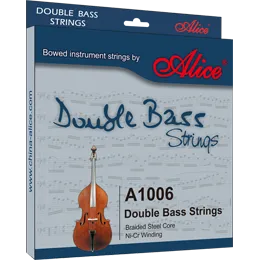
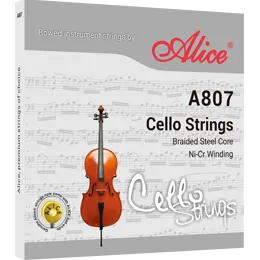
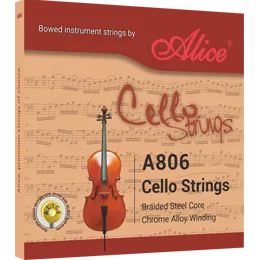
For example, Alice offers several cello string models with different constructions and material combinations.
Note: The positioning above is a preliminary product-planning guide, not a guarantee of suitability for every player. Buyers should confirm the current specifications, string set configuration, and intended applications with the supplier.
A broad product range can help distributors serve customers with different budgets and playing requirements. However, more models do not automatically mean a better supplier. What matters is whether the manufacturer can clearly distinguish its products and provide reliable specifications for each model.
Before making a decision, compare:
Core construction and winding materials
Available string sets and individual string options
Product specifications and packaging formats
Intended applications and target price segments
Sample availability and customization options
This evaluation can help you build a product portfolio with clear differences between models instead of stocking several products that serve essentially the same purpose.
3. Evaluate Product Quality and Batch Consistency
Product quality should be assessed through a repeatable process, not only by testing one sample.
For cello strings, buyers may need to evaluate fit, installation, tuning behavior, response, playing feel, and sound under suitable playing conditions. The importance of each factor depends on the target customer and product positioning.
A practical supplier evaluation should cover three stages.
Sample evaluation
Request samples of the exact models you intend to purchase. Test them under consistent conditions and compare the results with your requirements.
Depending on your product range, the evaluation may include:
String dimensions and other agreed specifications
Installation and fit on the intended instrument
Tuning and playing behavior during normal use
Response and sound characteristics
Packaging, labeling, and product identification
Where sound or playability is important to your customers, use experienced players or qualified evaluators and establish consistent test conditions. Avoid relying on a single subjective impression to assess every aspect of quality.
Pre-production approval
Once a suitable sample has been selected, document the approved model, specifications, packaging, labeling, and other critical requirements.
For private-label orders, also confirm artwork, brand presentation, barcode requirements, and packaging dimensions before mass production begins.
The approved sample should serve as a reference for the production order. Any material change to the agreed specifications or packaging should be communicated and approved through a defined process.
Batch consistency
Ask the manufacturer how it controls product conformity during production and how it handles nonconforming products.
Useful questions include:
Which product characteristics are checked during production?
What inspection procedures are used for finished products?
Are product specifications and inspection criteria documented?
How are production batches identified, if batch identification is part of the supplier's system?
What happens if a shipment does not meet the agreed requirements?
Not every supplier uses the same inspection methods or documentation system. The important point is to establish whether its procedures are appropriate for your order and whether the supplier can provide evidence of conformity with the agreed specifications.
A reliable manufacturer should be able to explain its quality control process clearly and agree on measurable acceptance criteria before bulk production.
4. Confirm MOQ, Lead Times, and Long-Term Supply Capacity
A manufacturer may produce good strings but still be unsuitable for your business if its minimum order quantities, lead times, or supply arrangements do not match your needs.
Before placing an order, discuss the commercial and operational details in writing.
Evaluation item | What buyers should confirm |
Minimum order quantity (MOQ) | MOQ per model, string set, and packaging option |
Sample orders | Sample cost, availability, and delivery time |
Production lead time | Expected production period after specifications and payment terms are confirmed |
Repeat orders | Whether the same specifications and packaging can be maintained |
Peak-season capacity | How the supplier manages demand increases and scheduling conflicts |
Delivery arrangements | Packaging requirements, shipping terms, and estimated transit time |
Product changes | How changes to materials, specifications, or packaging are communicated |
Order issues | Procedures for handling shortages, defects, and other nonconformities |
Ask the supplier to distinguish production lead time from shipping time. Delivery estimates can change depending on order size, material availability, packaging approval, and transportation arrangements.
For distributors and wholesalers, repeat-order consistency is particularly important. A low initial price may offer limited value if later orders have different specifications, packaging, or delivery schedules.
If your business plans to expand, discuss expected annual demand and possible order forecasts with the manufacturer. This can help both parties plan production and materials more effectively, although forecasts should not be treated as guaranteed capacity commitments unless formally agreed.
5. Assess OEM, Private-Label, and Customization Support
For music brands, distributors, and retailers developing their own product lines, OEM or private-label support can be an important selection criterion.
Before choosing a supplier, clarify which parts of the product and packaging can be customized and what information the manufacturer needs to assess feasibility.
Potential customization requirements include:
Brand names and logos on retail packaging
Packaging design, language, and labeling
Product codes and SKU structures
String set configurations, where supported
Product specifications and other agreed technical requirements
Carton markings and shipping-packaging requirements
Not all customization requests are available for every model or order quantity. Confirm the MOQ, additional costs, development time, artwork approval process, and production lead time before committing to a project.
Buyers should also clarify who is responsible for approving packaging artwork and ensuring that product labels meet the requirements of their intended markets.
For private-label projects, maintain a written record of the approved product specification and packaging version. This helps reduce the risk of inconsistencies between the original order and subsequent production runs.
6. Check Quality Management and Supporting Documentation
Quality certifications and technical documentation can provide useful evidence when assessing a potential supplier, but they should be checked carefully.
If a manufacturer claims to hold ISO 9001 certification, request the relevant certificate and confirm the certified organization's name, scope, validity, and issuing certification body. Do not assume that a certificate held by a related company automatically covers every facility or product.
Depending on your purchasing requirements, you may also request:
Product specifications and model identification
Available inspection or test records
Material information, where applicable
Packaging and labeling specifications
Applicable declarations or compliance documents, where required
Procedures for managing product changes and quality complaints
The documents required will depend on the product, destination market, customer requirements, and applicable regulations. Buyers should identify these requirements before ordering rather than assume that every cello string product requires the same certifications.
A professional supplier should communicate clearly about which documents are available, which can be provided for a specific order, and which requirements need to be confirmed separately.
7. Evaluate Communication and Export Order Management
For international buyers, supplier communication can have a direct impact on order execution.
A manufacturer's ability to respond to technical questions, confirm specifications, review packaging artwork, and communicate schedule changes is important throughout the purchasing process.
Before entering a long-term relationship, assess whether the supplier can:
Provide clear quotations with model numbers and order quantities
Confirm specifications and packaging requirements in writing
Respond to questions about samples and product differences
Communicate production schedules and changes promptly
Coordinate shipping documentation and packaging details as agreed
Handle quality concerns through a defined communication process
Trade show participation and international business experience may be useful background information, but they are not substitutes for verifying product quality, documentation, and order execution.
Where possible, begin with a manageable order, document the results, and evaluate the supplier's performance before increasing order volumes.
8. A Practical Checklist for Choosing a Cello String Manufacturer
Use the following checklist to compare potential suppliers on the same criteria.
Evaluation criterion | Questions to ask |
Manufacturing capability | Can the supplier explain its production processes and relevant experience? |
Product range | Are the available models suitable for your target customers and price segments? |
Product specifications | Are model specifications complete, clear, and consistent? |
Sample quality | Have the samples been evaluated against agreed criteria? |
Quality control | Can the supplier explain its inspection procedures and how it handles nonconforming products? |
Batch consistency | Are approved specifications and packaging documented for repeat orders? |
MOQ and lead time | Do the commercial terms fit your purchasing plan? |
Supply capacity | Can the supplier support expected order volumes and discuss future demand? |
OEM/private label | Are branding, packaging, and customization requirements clearly defined? |
Documentation | Are the necessary certificates, test records, and other documents available where applicable? |
Communication | Are quotations, specifications, changes, and delivery schedules confirmed clearly? |
After-sales support | Is there a defined process for addressing quality or delivery issues? |
You can use this checklist to compare two or more suppliers before making a decision. Give greater weight to the factors that matter most to your business—for example, consistent specifications and repeat-order reliability for established distributors, or flexible packaging and manageable MOQs for emerging brands.
9. Why Product-Specific Evaluation Matters
A manufacturer's overall reputation is only one part of the decision. Buyers should also assess the exact cello string models they plan to purchase.
For example, solid steel core and braided steel core strings have different construction characteristics. Buyers should compare the specifications and test the actual products rather than assume that one construction is universally superior.
You can review the following Alice models for a more product-specific comparison:
A803 Cello Strings
A804 Steel Core Al-Mg Cello Strings
A805A Steel Core Chrome Alloy Cello Strings
A806 Braided Steel Core Chrome Alloy Cello Strings
A807 Braided Steel Core Ni-Cr Cello Strings
Reviewing individual models can help buyers understand the available construction and material options before requesting samples or discussing a product assortment.
Conclusion
Choosing a reliable cello string manufacturer requires more than comparing prices or reviewing a product catalog. Buyers should evaluate manufacturing capabilities, product specifications, sample quality, batch consistency, supply capacity, customization support, documentation, and communication.
The most effective approach is to establish clear requirements before ordering, test samples against those requirements, document the approved specifications, and evaluate the supplier's performance through the production and delivery process.
For brands, distributors, and wholesale buyers, this structured evaluation can reduce purchasing uncertainty and provide a stronger basis for long-term supplier relationships.
Looking for cello strings for your product range? Explore the Alice A803–A807 models linked above and contact the supplier to discuss available specifications, sample evaluation, packaging options, and wholesale or private-label requirements.
Frequently Asked Questions
1. What should I check before choosing a cello string manufacturer?
Start with the manufacturer's relevant production experience, product specifications, sample quality, quality control procedures, MOQ, lead time, and ability to support repeat orders. For OEM or private-label projects, also confirm packaging customization and documentation requirements.
2. How can I evaluate cello string quality before placing a bulk order?
Request samples of the exact models you plan to purchase. Evaluate them against agreed specifications and practical playing requirements, then document the approved sample and packaging before mass production. Ask the supplier how finished products are inspected and how nonconforming batches are handled.
3. Is a manufacturer with a larger product range always a better choice?
No. A broad product range can help buyers serve different market segments, but product suitability, quality consistency, technical support, and supply reliability are more important than the number of models available.
4. What is the difference between OEM and private-label cello strings?
Private-label arrangements generally involve selling products under the buyer's brand, often using an existing product model with customized packaging. OEM arrangements may involve a broader set of agreed product or packaging requirements, depending on the supplier's capabilities and the contract. Buyers should confirm the precise scope, MOQ, costs, and responsibilities before starting the project.