
How to Choose the Right Acoustic Bass Strings: Materials, Construction, and Applications
Learn how to choose acoustic bass strings by core construction, wrap material, gauge, coating, application, and OEM supplier capabilities.


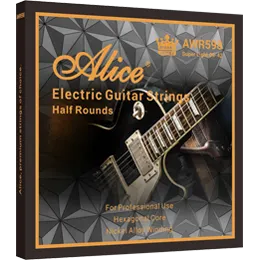
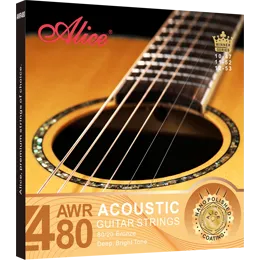
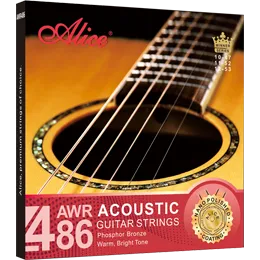
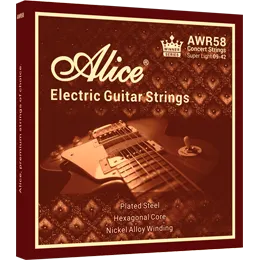


Choosing acoustic bass strings involves more than comparing prices or selecting a familiar material. String construction, gauge, instrument compatibility, and playing requirements all influence whether a particular set is suitable for a musician or a product range.
Phosphor bronze is one winding material used in acoustic instrument strings. For brands, distributors, and wholesale buyers, understanding how winding material fits into the overall string design can help when comparing specifications and developing products for different market segments.
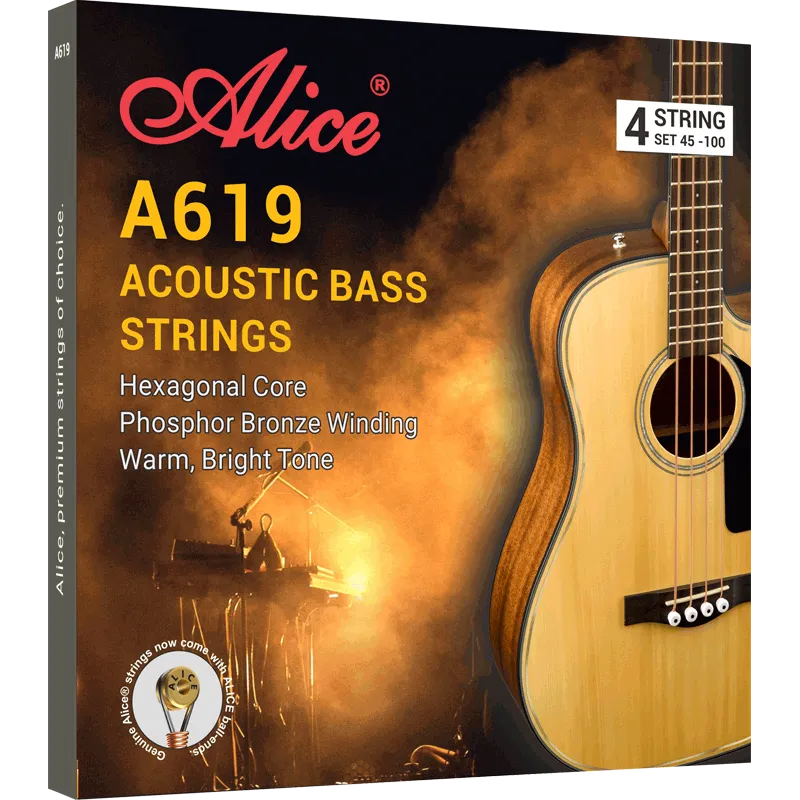
Alice® A619 acoustic bass strings combine phosphor bronze winding with a stated hexagonal high-carbon steel core and nano polished coating. This guide explains the key construction details, reviews the standard specifications provided for A619, and outlines what buyers should consider when evaluating acoustic bass strings for retail or OEM/ODM projects.
Phosphor bronze is a copper-based alloy used as a winding material in various acoustic instrument strings. It is one of several material options available to string manufacturers, alongside other alloys and winding constructions.
The winding material is an important part of a string's design, but it does not determine the final sound by itself. The core, string gauge, winding construction, instrument characteristics, playing technique, and amplification setup can all influence the resulting sound and playing experience.
When comparing phosphor bronze acoustic bass strings, buyers should consider three questions:
Material specifications: Is the winding material clearly identified by the manufacturer?
Complete string construction: What core material, gauge, and surface treatment are used?
Application requirements: Does the product match the intended instrument, target customers, and playing environment?
For brands and distributors, these details provide a more reliable basis for product evaluation than broad claims about tone or durability.
Alice® A619 combines three stated construction features:
Hexagonal high-carbon steel core
Phosphor bronze winding
Nano polished coating
Each feature describes a different aspect of the product. Buyers should evaluate the complete construction rather than assuming that one material or treatment guarantees a particular performance result.
A619 uses phosphor bronze as its winding material. Winding material is one of the construction variables that manufacturers consider when developing strings for acoustic instruments.
When evaluating A619, buyers should review its full specifications and, where possible, assess a sample on the intended instrument. This helps determine whether the string set meets their requirements for playing feel, sound, and overall application.
Material names alone cannot guarantee a particular tonal character. Results may vary with instrument construction, string gauge, playing technique, and amplification.
A619 is specified with a hexagonal high-carbon steel core. Core material and geometry are important construction details in string design.
For product evaluation, buyers should confirm the complete specifications, including the core structure, gauge, winding material, and compatibility with the intended instrument. These details are particularly relevant when comparing models or planning a product range with multiple string constructions.
A619 is also specified with nano polished coating. This identifies a surface treatment used in the product's construction.
The actual effects of a coating depend on the specific treatment and supporting product data. Buyers interested in corrosion resistance, maintenance requirements, or service life should consult the manufacturer's technical information and any available test results rather than relying on the coating name alone.

The following specifications are provided for the A619 model and should be checked against the current product documentation before ordering.
Feature | Specification |
Product | Alice® A619 Acoustic Bass Strings |
Application | Acoustic bass |
Core | Hexagonal high-carbon steel core |
Winding material | Phosphor bronze |
Coating | Nano polished coating |
Standard gauge | 45–100 Medium |
Set configuration | 4-string set |
Instrument scale | Stated for 34-inch instruments |
String | Diameter |
G – 1st | .045 inch / 1.14 mm |
D – 2nd | .065 inch / 1.65 mm |
A – 3rd | .080 inch / 2.03 mm |
E – 4th | .100 inch / 2.54 mm |
Before purchasing or incorporating A619 into a product catalogue, confirm the gauge, scale compatibility, set configuration, and other required specifications with the manufacturer. Instrument compatibility should not be determined by scale length alone; the instrument's intended string type and setup requirements also matter.
For more product information, visit the Alice® A619 Acoustic Bass Strings product page.
Different customers may have different priorities when choosing acoustic bass strings. Rather than assuming that a particular material is suitable for every application, brands and distributors should evaluate products against their intended use.
For live applications, consider instrument compatibility, preferred playing feel, and how the strings perform with the player's instrument and amplification setup.
If a product is being positioned for performance-oriented customers, sample evaluation can help establish whether its characteristics match the target market's expectations.
Recording applications may require repeatable results across sessions. Buyers should consider the complete string specification and evaluate the product under consistent instrument, playing, and recording conditions.
A material description alone does not establish recording performance. Practical evaluation is more useful when selecting a string set for a specific recording workflow.
For retailers, distributors, and private-label brands, a clear product specification helps distinguish models and guide customer selection.
Useful information includes the winding material, core construction, gauge, set configuration, instrument compatibility, packaging, and any verified product-specific performance data.
Providing this information makes it easier for buyers to compare models and match products to their customers' needs.
A product portfolio can serve different customer requirements by offering clearly documented construction options. The following Alice® models provide a starting point for comparison.
Model | Stated construction information | What buyers should review |
High-carbon steel core with copper-plated alloy winding | Full specifications, gauge, and instrument compatibility | |
Hexagonal high-carbon steel core | Winding material, gauge, and complete product specifications | |
Phosphor bronze winding, hexagonal high-carbon steel core, and nano polished coating as stated for this model | Complete construction details, standard gauge, and application requirements |
The models differ in their stated construction details. However, material differences alone do not establish a definitive ranking in tone, durability, or overall performance.
For a meaningful comparison, buyers should confirm the full specifications for each model and evaluate the products against their intended market requirements.
Explore the complete Alice® acoustic bass strings range to review the available product options.
Selecting a string model for wholesale distribution or a private-label project involves more than choosing a winding material.
Check the core material, winding material, gauge, set configuration, scale compatibility, and any stated surface treatment. Make sure the specifications are suitable for the intended instruments and target customers.
Identify whether the product is intended for entry-level retail, regular players, performance-oriented customers, or another defined segment. Product positioning should reflect actual specifications and verified product characteristics.
For OEM/ODM projects, discuss the required string specifications, packaging format, branding, labelling, and order requirements with the supplier. Confirm which options are available before finalizing the product plan.
Sample evaluation allows buyers to check instrument compatibility, playing feel, and sound under their intended conditions before making broader product decisions.
For larger product programmes, documenting the approved specifications and sample reference can also help maintain consistency when discussing repeat orders.
For brands, distributors, and wholesale buyers, a suitable string supplier should be able to clarify product specifications and discuss the requirements of the intended market.
Alice® offers an acoustic bass string range that includes models with different stated construction features. Buyers considering a new product line or expanding an existing catalogue can review the available models and discuss applicable product and packaging requirements.
OEM/ODM discussions may cover topics such as:
Standard and requested string specifications
Gauge and material requirements
Product packaging and branding
Product selection for different market segments
Sample evaluation and order requirements
Available customization options, technical specifications, and order conditions should be confirmed directly with the supplier for each project.
To explore the range, visit the Alice® acoustic bass strings category or review the A619 model specifications.
Evaluating phosphor bronze acoustic bass strings requires consideration of the complete string construction rather than relying on a single material claim. Core structure, winding material, gauge, surface treatment, instrument compatibility, and intended use all contribute to the product selection process.
Alice® A619 combines a stated hexagonal high-carbon steel core, phosphor bronze winding, and nano polished coating in a 45–100 Medium four-string set. For players, retailers, and distributors, reviewing the complete specifications and evaluating the strings under the intended conditions provides a practical basis for deciding whether the model meets their needs.
To compare available models or discuss product requirements, visit the Alice® acoustic bass strings range or contact the supplier about A619 and potential OEM/ODM requirements.
Phosphor bronze is a copper-based alloy used as a winding material in acoustic instrument strings. Its contribution to the final sound depends on the complete string design, including the core, gauge, winding construction, instrument, and playing conditions.
A619 is specified with a hexagonal high-carbon steel core, phosphor bronze winding, and nano polished coating. Buyers should consult the current product documentation to confirm the complete specifications before ordering.
The stated standard set is 45–100 Medium, with .045, .065, .080, and .100-inch strings. Confirm the current specifications and instrument compatibility with the manufacturer before purchasing.
A619 can be evaluated for acoustic bass applications involving live performance or recording. Suitability depends on the player's requirements, instrument, setup, and preferred sound. Testing the strings under the intended conditions is the most reliable way to assess their fit.
The models have different stated construction details. A616 is specified with a high-carbon steel core and copper-plated alloy winding; A618 is specified with a hexagonal high-carbon steel core; and A619 is specified with phosphor bronze winding and nano polished coating, as well as a hexagonal high-carbon steel core in the information provided for this model. Review each product page for the full specifications before making a comparison.
Brands and distributors can contact Alice® to discuss their product requirements, including string specifications and packaging. The availability of specific customization options, minimum order quantities, and order conditions should be confirmed for each project.