

How Bass Strings Are Made: Inside the Manufacturing Process
Learn how bass strings are made, from material selection and precision winding to quality control and packaging, with insights into OEM manufacturing.





Choosing the right bass strings can dramatically change how your instrument sounds and feels. While gauge and winding type are important, the string material itself plays a major role in shaping your tone, playing experience, and overall performance.
Among the many options available today, nickel-plated steel and stainless steel are the two most popular materials for electric bass strings. Both are widely used by beginners, professional musicians, recording artists, and touring performers, yet they offer noticeably different characteristics.
Some bassists prefer the warm, balanced sound of nickel strings, while others choose stainless steel for its bright attack, enhanced clarity, and outstanding durability. There is no universally "better" option—the right choice depends on your playing style, musical genre, tonal preference, and performance environment.
In this guide, we'll compare nickel and stainless steel bass strings in detail, including their construction, tone, feel, sustain, durability, playing techniques, and ideal applications. Whether you're selecting your next set of strings or sourcing products for your own music brand, this article will help you make an informed decision.

Nickel-plated bass strings produce a warm, balanced tone with a smooth playing feel, making them an excellent choice for rock, blues, pop, jazz, and everyday practice. Stainless steel bass strings deliver brighter highs, stronger attack, tighter low-end definition, and superior corrosion resistance, making them especially popular for slap bass, funk, metal, and players seeking maximum clarity. Neither material is objectively better—the best option depends on your preferred sound, playing technique, and musical style.
· Why Does Bass String Material Matter?
· What Are Nickel-Plated Bass Strings?
· What Are Stainless Steel Bass Strings?
· Nickel vs. Stainless Steel Bass Strings: Side-by-Side Comparison
· Tone Comparison
· Which Material Fits Your Playing Style?
· Best Choice for Different Music Genres
· Durability and Maintenance
· Which Strings Should Beginners Choose?
· Custom Bass Strings: OEM & Private Label Solutions
· Frequently Asked Questions
· About Alice Strings
Many bass players focus primarily on string gauge or whether to choose roundwound or flatwound strings. While these factors certainly influence tone and feel, the material used for the string winding has an equally significant impact on your instrument's overall sound and playing characteristics.
Unlike electric guitars, bass guitars produce lower frequencies and operate under much higher string tension. Because of this, the winding material has a greater influence on:
· Overall tonal balance
· Low-frequency response
· Attack and note definition
· Sustain
· Harmonic richness
· Playing feel
· Finger noise
· Corrosion resistance
· String lifespan
The material also affects how the strings interact with your pickups. Different alloys generate slightly different magnetic responses, which influence output level, articulation, and clarity.
For musicians who regularly perform, record, or tour, selecting the right material can make a noticeable difference in how the bass sits in a mix and responds to different playing techniques.
Before deciding which strings to buy, it's important to understand how each material behaves in real-world playing situations.
Nickel-plated bass strings are the most widely used strings on modern electric bass guitars. Despite the name, they are not made entirely of nickel.
Instead, they feature a high-carbon steel core wire wrapped with nickel-plated steel winding. This construction combines the strength and magnetic response of steel with the smoother feel and warmer tonal characteristics of nickel.
Because of their balanced performance, nickel-plated strings are often considered the industry standard and are suitable for nearly every playing style.
Nickel-plated bass strings are known for producing a balanced and musical sound.
Their tonal characteristics typically include:
· Warm low frequencies
· Smooth midrange
· Controlled high frequencies
· Natural note definition
· Balanced harmonic content
Compared with stainless steel strings, nickel produces less aggressive treble, making it easier to achieve a classic, full-bodied bass tone without excessive brightness.
Many studio engineers appreciate nickel strings because they sit naturally in a mix and require less EQ adjustment during recording.
One reason many bassists continue using nickel-plated strings is their comfortable feel.
The nickel-plated winding provides a smoother surface that creates less friction when moving across the fretboard.
Many players notice:
· Comfortable fingerstyle playing
· Reduced finger fatigue during long sessions
· Smoother slides
· Lower finger noise
· Easier transitions between positions
These characteristics make nickel strings especially popular among beginners, teachers, and musicians who perform for extended periods.
Nickel-plated strings offer an excellent balance between tone, comfort, and versatility.
Key advantages include:
· Warm, balanced sound
· Comfortable playing feel
· Strong low-end response
· Smooth mids
· Reduced finger noise
· Lower fret wear than harder alloys
· Suitable for almost every music genre
· Excellent choice for everyday practice and live performance
For players looking for one set of strings that performs well in almost any situation, nickel-plated strings remain one of the safest and most versatile options.
Although nickel strings are extremely versatile, they may not be ideal for every player.
Compared with stainless steel strings, they generally provide:
· Slightly less brightness
· Softer attack
· Less pronounced harmonics
· Moderate corrosion resistance
· Slightly shorter lifespan in humid environments
Players who require maximum brightness or have highly acidic perspiration may find stainless steel strings a better long-term solution.
Nickel-plated bass strings are particularly well suited for:
· Rock
· Pop
· Blues
· Jazz
· Country
· Gospel
· Worship music
· Indie music
· Recording sessions
· Daily practice
They are also an excellent starting point for beginners because they combine comfortable playability with a balanced tone that works well across a wide range of musical styles.
Alice AWR688 Hexagonal Steel Core + Nickel Steel Strings
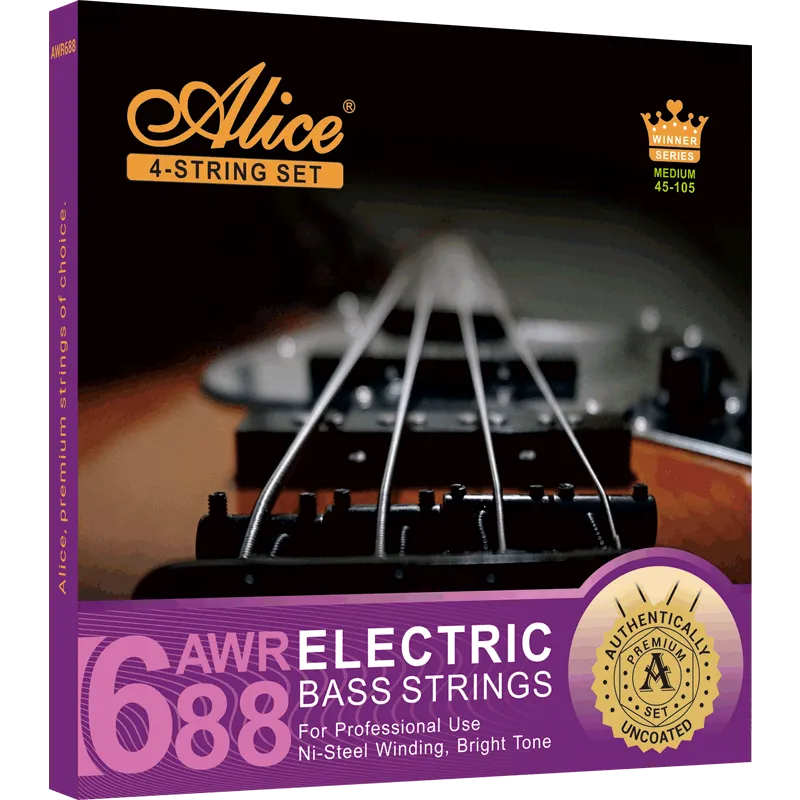
Alice manufactures high-quality nickel-plated bass strings designed to deliver consistent tone, stable tuning, and long-lasting performance.
Every set is produced using carefully selected raw materials and precision winding technology to ensure:
· Consistent string tension
· Accurate intonation
· Balanced frequency response
· Comfortable playing feel
· Reliable tuning stability
· Durable performance for practice, recording, and live use
Whether you're an individual musician or an international distributor, Alice offers dependable nickel-plated bass strings that meet the needs of both performers and professional music brands.
Stainless steel bass strings are made with a high-carbon steel core wrapped in stainless steel wire. Compared with nickel-plated strings, stainless steel is harder, more corrosion-resistant, and naturally produces a brighter, more articulate sound.
Because of their excellent clarity and extended high-frequency response, stainless steel strings are widely used by bassists who need maximum note definition, powerful attack, and long-lasting performance.
They are especially popular in modern music styles where articulation and precision are essential.
Stainless steel bass strings produce a more aggressive and energetic sound than nickel-plated strings.
Their tonal characteristics typically include:
· Bright, crisp highs
· Tight and focused low-end
· Strong upper-mid presence
· Excellent note separation
· Rich harmonic content
· Fast, articulate attack
Compared with nickel strings, stainless steel provides greater clarity, allowing every note to stand out—even in dense band mixes or heavily distorted arrangements.
For players who rely on articulation and dynamic expression, stainless steel strings often deliver a more immediate response.
Because stainless steel is a harder alloy, these strings generally feel slightly firmer under the fingers.
Many bassists describe them as offering:
· A textured surface
· Faster response to picking
· Greater tactile feedback
· Excellent control for aggressive techniques
· Slightly more finger noise during slides
While some players enjoy this added responsiveness, others may prefer the smoother feel of nickel-plated strings for long practice sessions.
Stainless steel strings offer several performance advantages, particularly for modern bass playing.
Benefits include:
· Bright and powerful tone
· Excellent note definition
· Strong attack
· Extended sustain
· Outstanding harmonic clarity
· Superior corrosion resistance
· Longer-lasting brightness
· Ideal for aggressive playing styles
Players who frequently perform live often appreciate how stainless steel strings help the bass remain clear and present in the overall mix.
Despite their advantages, stainless steel strings may not suit every bassist.
Possible disadvantages include:
· Brighter tone may be too aggressive for some genres
· Slightly rougher feel
· Increased finger noise
· Harder surface may contribute to faster fret wear over time
· Less suitable for players seeking a warm vintage sound
These characteristics are not necessarily disadvantages—they simply make stainless steel a better fit for certain applications than others.
Stainless steel bass strings are particularly well suited for:
· Funk
· Metal
· Progressive rock
· Hard rock
· Modern pop
· Fusion
· Gospel
· Slap bass
· Technical playing
· Live performances
Their bright response and powerful attack help every note remain clear, even during complex bass lines and fast passages.
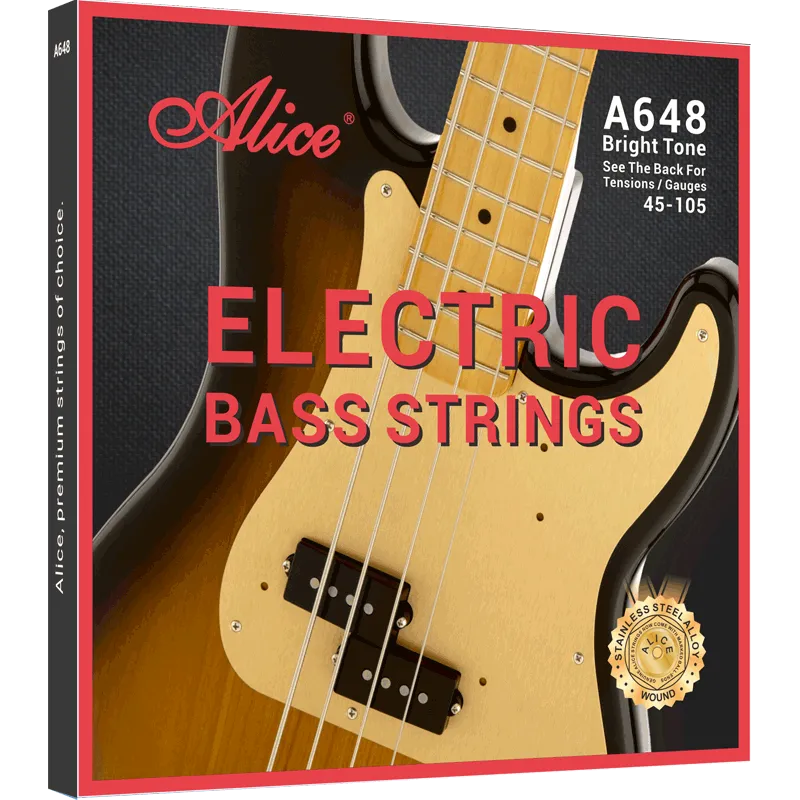
Alice stainless steel bass strings are engineered for players who demand clarity, durability, and consistent performance.
Our stainless steel strings feature:
· Precision winding technology
· Stable tuning performance
· Strong magnetic response
· Enhanced corrosion resistance
· Excellent consistency between production batches
Whether used on stage, in the studio, or for OEM production, Alice stainless steel bass strings are designed to deliver reliable performance under demanding playing conditions.
Alice A648 Uncoated Stainlese Steel Alloy
Choosing between nickel and stainless steel becomes much easier when comparing their characteristics directly.
Feature | Nickel-Plated Steel | Stainless Steel |
Overall Tone | Warm, balanced | Bright, aggressive |
Low-End Response | Full and rounded | Tight and focused |
Midrange | Rich and smooth | More pronounced |
High Frequencies | Smooth | Crisp and extended |
Attack | Soft to moderate | Fast and powerful |
Sustain | Long | Slightly longer |
Harmonics | Balanced | Rich and highly detailed |
Playing Feel | Smooth | Slightly textured |
Finger Noise | Lower | Higher |
Slap Performance | Very Good | Excellent |
Fingerstyle | Excellent | Excellent |
Pick Playing | Very Good | Excellent |
Corrosion Resistance | Good | Excellent |
Fret Wear | Lower | Slightly higher |
Lifespan | Long | Longer |
Recording | Warm, natural | Clear, highly defined |
Live Performance | Balanced | Cuts through the mix |
Best for Beginners | Excellent | Good |
Although both materials perform exceptionally well, their tonal personalities are noticeably different. Nickel emphasizes warmth and balance, while stainless steel focuses on clarity, articulation, and projection.
The tonal differences between nickel and stainless steel become even more apparent when examining specific frequency ranges and playing characteristics.
Nickel-plated strings generally produce a fuller, rounder low end with a smooth and natural character.
This makes them ideal for:
· Vintage bass tones
· Blues
· Classic rock
· Jazz
· Recording situations requiring warmth
Stainless steel strings, on the other hand, deliver a tighter and more controlled bass response.
Instead of sounding larger, they sound more focused, allowing each low note to remain distinct even during fast passages or complex arrangements.
Nickel strings provide smooth, musical mids that blend naturally with guitars, keyboards, and vocals.
Their balanced frequency response makes them particularly suitable for studio recording where excessive midrange can create conflicts in a mix.
Stainless steel strings emphasize upper-mid frequencies, producing stronger articulation and making individual notes easier to hear in live performances.
This is where the biggest difference appears.
Nickel-plated strings produce:
· Smooth highs
· Softer brightness
· Less aggressive overtones
Stainless steel strings deliver:
· Brilliant highs
· Crisp attack
· Enhanced clarity
· Strong harmonic detail
Players looking for maximum brightness generally prefer stainless steel.
Attack refers to how quickly and forcefully a note responds after being played.
Nickel strings provide a smooth, natural attack that works well in traditional music styles.
Stainless steel strings respond more immediately, creating a sharper attack that benefits technical playing, slap bass, and fast picking techniques.
Both materials offer excellent sustain, although stainless steel often maintains its brightness for a longer period.
Because stainless steel emphasizes higher frequencies, harmonic overtones are generally more noticeable.
This makes techniques such as:
· Harmonics
· Slap bass
· Pop techniques
· Tapping
sound more defined.
Nickel strings produce harmonics as well, but with a smoother, less aggressive character that many players describe as more musical.
In recording environments, nickel-plated strings are often chosen because they produce a balanced frequency response that requires less equalization during mixing.
Their warm tonal character fits naturally into many genres, especially rock, blues, jazz, and pop.
Stainless steel strings excel when engineers want maximum detail and articulation.
Their brighter sound helps individual bass notes remain clearly defined, even in complex productions.
For live performances, stainless steel strings often provide a slight advantage.
Their stronger attack and extended high-frequency response allow the bass to cut through loud stage mixes more effectively.
Nickel strings remain an excellent choice for live use as well, particularly when a smoother, fuller bass tone is preferred over maximum brightness.
The best bass strings aren't simply the brightest or the most durable—they're the ones that complement how you play. Different techniques place different demands on your strings, and choosing the right material can significantly improve both tone and playing comfort.
Below are recommendations based on the most common bass playing styles.
Fingerstyle is the most widely used bass technique across nearly every genre. It emphasizes consistency, dynamics, and tonal balance.
Nickel-plated strings are often the preferred choice because they offer:
· Warm, balanced tone
· Smooth attack
· Comfortable feel
· Reduced finger noise
· Excellent dynamic response
These qualities make them ideal for long practice sessions, recording, and live performances where a natural bass tone is desired.
Stainless steel strings also work well for fingerstyle, particularly if you prefer a brighter sound with more note definition. However, some players may find their textured surface slightly less comfortable during extended playing sessions.
Slap bass demands fast response, crisp attack, and pronounced harmonics.
Stainless steel strings excel because they provide:
· Bright, percussive tone
· Strong popping attack
· Excellent harmonic response
· Clear note separation
· Tight low-end
These characteristics make them the first choice for many funk, gospel, fusion, and modern pop bassists.
Nickel strings can certainly be used for slap playing, but the overall sound tends to be warmer and less aggressive.
Players who use a pick often want greater attack and definition.
Choose Nickel-Plated Steel if you want:
· Classic rock tone
· Smooth mids
· Vintage character
Choose Stainless Steel if you prefer:
· More aggressive attack
· Better articulation
· Higher output
· Modern rock or metal tones
Five-string basses place greater emphasis on low-frequency clarity.
The low B string can easily sound muddy if the string material lacks definition.
Many five-string players prefer stainless steel because it helps produce:
· Tighter low frequencies
· Better string separation
· Improved note clarity
· More focused attack
Nickel strings remain an excellent option if you prefer a fuller and rounder low-end response.
Ultimately, the choice depends on whether you prioritize warmth or definition.
Lower tunings require strings that maintain clarity under reduced pitch.
Stainless steel strings often perform exceptionally well because their brighter response helps preserve note definition in lower registers.
Combined with an appropriate heavy gauge, they are a popular choice for:
· Metal
· Progressive rock
· Modern hard rock
Different musical styles call for different tonal characteristics. While personal preference always plays an important role, the following recommendations provide a useful starting point.
Music Genre | Recommended Material | Why |
Rock | Nickel-Plated Steel | Balanced tone with strong mids |
Blues | Nickel-Plated Steel | Warm, expressive sound |
Jazz | Nickel-Plated Steel | Smooth dynamics and vintage character |
Country | Nickel-Plated Steel | Natural, balanced response |
Worship | Nickel-Plated Steel | Warm tone that blends well |
Funk | Stainless Steel | Bright attack for slap techniques |
Metal | Stainless Steel | Tight low-end and excellent clarity |
Progressive Rock | Stainless Steel | Strong articulation in complex passages |
Fusion | Stainless Steel or Nickel | Depends on tonal preference |
Pop | Either Material | Choose based on desired brightness |
Remember that these are general recommendations rather than strict rules. Many professional bassists experiment with different string materials depending on the instrument, recording session, or live performance requirements.
No matter which material you choose, proper maintenance can significantly extend string life and preserve consistent tone.
Under similar playing conditions, stainless steel strings generally retain their brightness longer than nickel-plated strings.
This is because stainless steel naturally offers better resistance to:
· Sweat
· Humidity
· Oxidation
· Corrosion
Players with acidic perspiration often find that stainless steel strings stay bright and playable for a longer period.
Nickel-plated strings also offer excellent durability but may lose some of their high-frequency sparkle more quickly after heavy use.
Good maintenance habits help maximize the lifespan of any bass string.
To keep your strings performing at their best:
· Wash your hands before playing.
· Wipe the strings with a clean microfiber cloth after every session.
· Store your bass in a dry, temperature-stable environment.
· Avoid exposing the instrument to excessive humidity.
· Replace worn strings before important performances or recording sessions.
These simple practices help maintain tone, tuning stability, and overall playability.
Even high-quality bass strings eventually wear out.
Common signs include:
· Noticeable loss of brightness
· Difficulty staying in tune
· Rust or visible discoloration
· Reduced sustain
· Poor intonation
· Rough playing feel
· Increased string breakage risk
Replacing old strings at the right time ensures your instrument continues to perform at its best.
For most beginners, nickel-plated steel bass strings are the safest and most versatile option.
They provide a comfortable balance of tone, feel, and durability while being forgiving enough for players who are still developing technique.
Nickel-plated strings offer several advantages for new bassists:
· Smooth playing feel
· Balanced tone suitable for many genres
· Reduced finger noise
· Comfortable tension when paired with standard gauges
· Excellent value for everyday practice
These characteristics help beginners focus on learning technique rather than adapting to an overly bright or aggressive string.
As players gain experience, some may decide to switch to stainless steel strings if they:
· Play primarily slap bass
· Prefer a brighter, more modern sound
· Perform metal or funk music
· Need longer-lasting brightness
· Have acidic perspiration that shortens string life
Many professional bassists use both materials interchangeably depending on the instrument, recording project, or performance setting.
Selecting the wrong strings can affect both tone and playability. Avoid these common mistakes when purchasing your next set.
Lower-priced strings may seem attractive, but consistent quality, tuning stability, and longevity often provide better long-term value than the initial purchase price.
A slap bassist and a jazz bassist rarely need the same type of strings. Always choose strings that match your primary playing technique and musical style.
Before purchasing new strings, confirm whether your bass requires short-scale, medium-scale, long-scale, or extra-long-scale strings. Using the wrong scale length can cause poor string tension, unstable tuning, and installation difficulties.
String material is only one part of your overall sound. Factors such as string gauge, pickup design, amplifier settings, playing technique, and instrument setup also contribute significantly to your final tone.
While standard bass strings meet the needs of most musicians, many distributors, retailers, and music brands require products that are customized for their target markets.
Custom bass strings allow companies to develop products with specific tonal characteristics, packaging requirements, and brand positioning.
Whether you are building a new string brand, expanding an existing product line, or looking for a reliable manufacturing partner, choosing the right OEM bass string supplier is essential.
Different markets and player groups often have different expectations for bass strings.
For example:
· Beginners may prefer comfortable, balanced strings with affordable pricing.
· Professional musicians may require specific gauges, tension, and tonal characteristics.
· Retail brands may need unique packaging and private label solutions.
· Distributors may require stable production capacity and consistent quality.
A customized bass string solution allows brands to create products that better match customer expectations.
Professional bass string manufacturers can provide customization in multiple areas, including:
Options include:
· Nickel-plated steel bass strings
· Stainless steel bass strings
· Coated bass strings
· Other customized material solutions
Different materials allow brands to target different sound preferences and market segments.
Customization can include:
· Roundwound construction
· Flatwound construction
· Different core designs
· Custom winding specifications
· Customized tension characteristics
These factors directly influence tone, feel, and playing performance.
Bass players have different requirements depending on their playing style and instruments.
OEM solutions can support:
· Light gauge bass strings
· Medium gauge bass strings
· Heavy gauge bass strings
· Custom gauge combinations
This allows brands to develop products for beginners, professional players, and specific music genres.
Custom sets can be developed for different instruments, including:
· 4-string bass
· 5-string bass
· 6-string bass
· Long-scale bass
· Extra-long-scale bass
For distributors and music brands, product presentation is an important part of market positioning.
OEM services may include:
· Custom packaging design
· Brand logo printing
· Retail-ready packaging
· Barcode solutions
· Product labeling
· Private label production
With more than 20 years of experience in musical instrument string manufacturing, Alice Strings provides reliable bass string solutions for musicians, distributors, wholesalers, and international brands.
Our bass string production combines:
· Professional manufacturing experience
· Precision winding technology
· Strict quality control processes
· Consistent production standards
· Flexible OEM and ODM capabilities
Alice offers a wide range of bass string solutions, including:
· Nickel-plated bass strings
· Stainless steel bass strings
· Electric bass strings
· Acoustic bass strings
· Custom bass string solutions
Whether you need standard products for retail distribution or customized strings developed for your own brand, Alice works closely with customers to deliver consistent quality, competitive solutions, and reliable supply capability.
Neither material is universally better. Nickel-plated bass strings provide a warmer, smoother, and more balanced tone, while stainless steel strings offer brighter attack, stronger clarity, and better corrosion resistance. The best choice depends on your playing style, preferred tone, and performance needs.
Yes. Stainless steel bass strings generally produce a brighter and more aggressive tone because the material emphasizes high frequencies and harmonic content. They are especially popular for slap bass, funk, metal, and modern playing styles.
Yes. Nickel-plated bass strings are one of the best choices for beginners because they provide a comfortable feel, balanced tone, and versatility across many music styles.
Stainless steel bass strings are often preferred for slap bass because they provide stronger attack, brighter tone, and clearer harmonic response. However, some players prefer nickel strings for a warmer and smoother slap sound.
Generally, stainless steel strings maintain their brightness longer than nickel-plated strings because they offer better corrosion resistance. However, lifespan depends on playing frequency, sweat, humidity, cleaning habits, and storage conditions.
Because stainless steel is harder than nickel-plated steel, it may contribute to slightly increased fret wear over long periods of use. However, proper setup, playing technique, and regular maintenance can minimize potential issues.
Yes. Most bass guitars can use either material without modification. However, because stainless steel strings may have different tension and brightness characteristics, some players may need minor setup adjustments for optimal performance.
Both materials work well for recording.
Nickel strings are often preferred when a warm, natural, and balanced tone is desired.
Stainless steel strings are useful when engineers need brighter attack, stronger definition, and more presence in the mix.
The best choice depends on the production style and desired sound.
Choosing between nickel and stainless steel bass strings is ultimately about finding the right balance between tone, feel, durability, and playing style.
Nickel-plated bass strings are ideal for players who want:
· Warm and balanced tone
· Smooth playing feel
· Versatility across different genres
· Comfortable long-term playing
Stainless steel bass strings are ideal for players who want:
· Bright and powerful attack
· Strong note definition
· Excellent corrosion resistance
· Modern, aggressive tone
There is no single best bass string material for every musician. The right choice depends on your instrument, technique, musical style, and personal sound preference.
For brands and distributors, customized bass string solutions provide an opportunity to create products that meet specific market demands.
With extensive manufacturing experience and OEM/ODM capabilities, Alice Strings helps customers develop reliable bass strings for musicians and markets worldwide.
· Bass Strings vs Guitar Strings
· Roundwound vs Flatwound Bass Strings
· How to Choose Bass String Gauge
· Nickel-Plated vs Stainless Steel Bass Strings
· How Long Do Bass Strings Last?
· Custom Bass Strings Manufacturer: OEM & Private Label Bass String Solutions
· How Bass Strings Are Made: Inside the Manufacturing Process